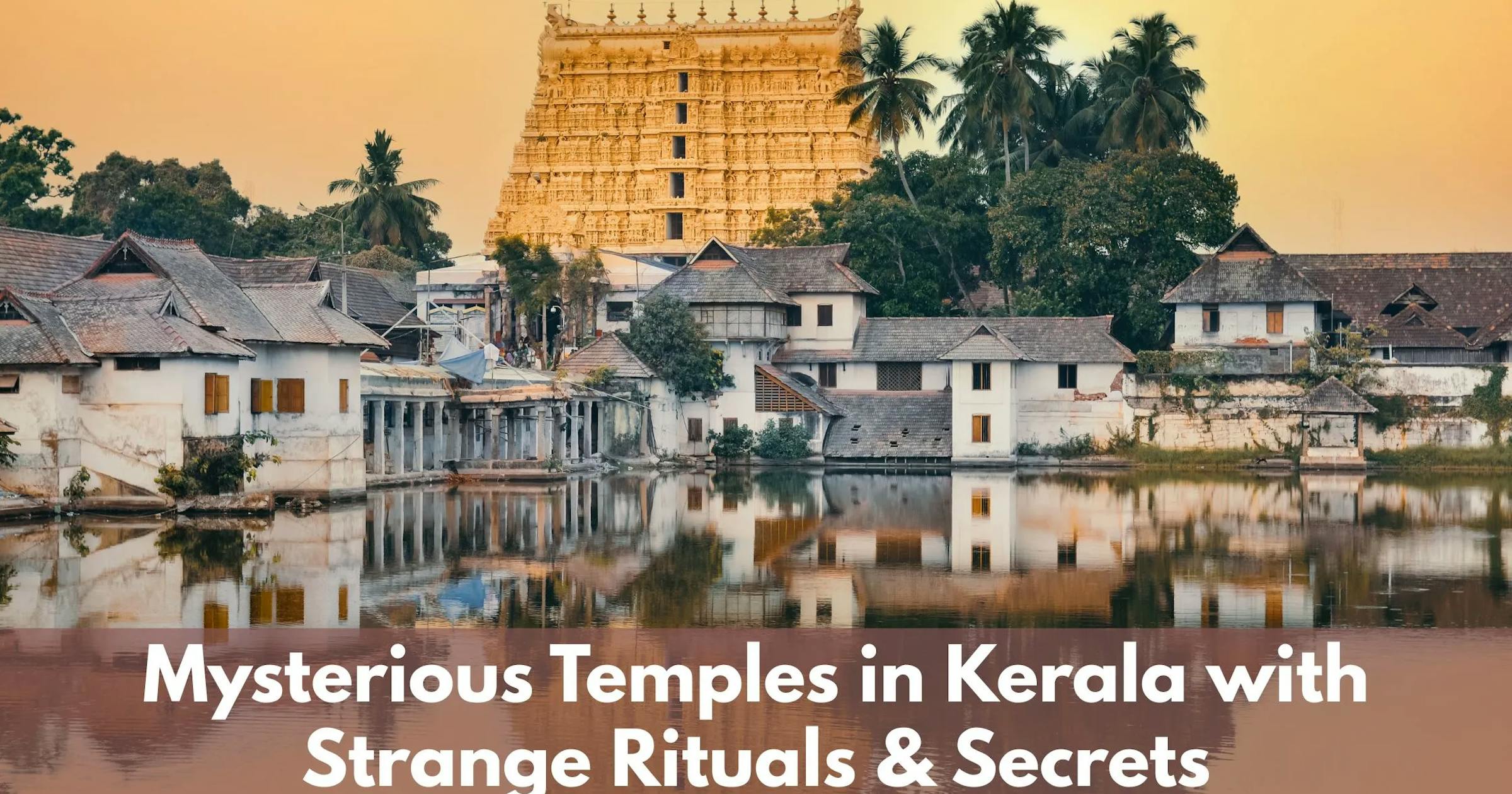
Kerala, often called God’s Own Country, is home to some of the most mysterious temples in Kerala, where ancient rituals, unexplained phenomena, and deep-rooted beliefs challenge logic and science.
From serpent deities and secret vaults to unusual rituals and spiritual healing, these unique temples in Kerala attract devotees, travelers, and curious minds alike.
Nestled in a serene forest glade in Haripad, in Kerala’s Alappuzha district, Mannarasala Nagaraja Temple is one of the most famous and mysterious temples in Kerala, renowned for its deep-rooted serpent worship traditions.
According to local legend, centuries ago a devastating fire swept through the forest, leaving countless serpents injured. A childless Brahmin couple, Vasudeva and Sreedevi of Mannarasala Illam, compassionately cared for the wounded snakes. Moved by their devotion, the serpent deity Nagaraja is believed to have appeared before them and blessed the couple, promising to be born as their child.
Soon after, Sreedevi gave birth to two sons: one human and one a divine five-headed serpent. This extraordinary legend is what makes Mannarasala Nagaraja Temple one of the most unique temples in Kerala, blending mythology, faith, and mystery.
Adding to its uniqueness, the temple follows a rare tradition where the chief priest is a woman, known as Mannarasala Amma. This stands out in Kerala’s predominantly male-led temple practices and strengthens the temple’s spiritual identity.
The temple complex is filled with thousands of serpent idols, attracting devotees from across India. It is especially popular among couples seeking fertility, making it one of the most visited serpent temples in Kerala. Devotees perform a special offering called uruli kamazhthal, a ritual believed to fulfill prayers for children.
Located on the banks of the Meenachil River in Kottayam, the Thiruvarpu Sree Krishna Temple is one of the most unique temples in Kerala, famous for its belief that the deity is always hungry.
According to local tradition, if the food offering, known as nivedyam, is delayed after the ritual bath, the deity’s waist belt is believed to fall due to hunger. This belief highlights the temple’s emphasis on timely offerings and devotion.
Unlike most temples in India, this temple remains open even during solar and lunar eclipses, which are usually considered inauspicious. The temple opens as early as 2:00 AM, making it one of the earliest opening temples in the region. Priests are even given an axe along with the key, as legend says the door must be opened without delay to serve the deity.
Another popular belief is that after receiving the early morning offering here, Lord Krishna travels to Ambalapuzha Temple for the midday offering and later to Sree Padmanabhaswamy Temple for the evening meal, before returning by early morning.
This fascinating tradition makes it one of the most mysterious temples in Kerala, drawing devotees and travelers interested in unusual beliefs and rituals.
Dedicated to Goddess Bhadrakali, Kodungallur Bhagavathy Temple in Thrissur district is one of the most mysterious temples in Kerala, known for its intense and unconventional rituals.
During the annual Bharani Festival, devotees, especially temple oracles known as velichappadu, enter a trance-like state and shout loud, crude, and abusive words at the deity. While this may seem shocking, it is considered a form of raw and honest devotion. According to local belief, the goddess is pleased by this unfiltered expression of faith.
The festival begins with Kozhikkallu Moodal, a ritual involving symbolic offerings to appease the goddess and her attendants. Oracle-priests dressed in red move around the temple in a possessed state, sometimes striking their foreheads with swords. This powerful ritual blurs the line between devotion, ancient tribal practices, and spiritual trance.
This temple stands out among unique temples in Kerala for preserving rituals that date back to early folk traditions and goddess worship.
Located in Chengannur in Kerala’s Alappuzha district, Chengannur Mahadeva Temple is one of the most mysterious temples in Kerala, where Lord Shiva and Goddess Parvati are worshipped together.
What makes this temple unique is the rare and sacred belief that Goddess Parvati undergoes menstruation, a human biological process associated with fertility and creation. This phenomenon is celebrated through the annual Thriputharattu festival, making it one of the most distinctive Kerala temple rituals.
According to temple tradition, when signs of menstruation are observed on the deity’s clothing, a senior woman from the Thazhamon family is called to confirm the event. The idol is then moved to a separate chamber for four days, during which the temple remains closed. On the fifth day, elaborate purification rituals and celebrations take place.
This practice symbolizes the cycle of life, fertility, and the divine feminine, making it one of the most unique temples in Kerala and a subject of curiosity for visitors and researchers alike.
Located near Kochi in Ernakulam district, Chottanikara Bhagavathy Temple is widely known as one of the most powerful spiritual healing centers and one of the most mysterious temples in Kerala.
The temple is associated with rituals believed to help people suffering from mental distress or negative influences. Devotees visit seeking relief, and priests perform traditional ceremonies aimed at restoring balance and peace.
One of the most striking features of the temple is the large pala tree, whose trunk is embedded with numerous iron nails. As part of a symbolic ritual, devotees hammer nails into the tree under priestly guidance. It is believed that this act transfers negative energy away from the person and into the tree.
Whether seen as a spiritual practice, psychological relief, or an ancient healing method, this ritual makes the temple one of the most unique temples in Kerala and a subject of ongoing fascination.
The temple is also known for its powerful evening ritual called Guruthi Pooja, which draws many devotees daily.
Located in Thiruvananthapuram, Sree Padmanabhaswamy Temple is not only one of the most famous temples in Kerala but also one of the most mysterious temples in the world.
The temple gained global attention in 2011 when several sealed vaults were opened, revealing vast treasures including gold coins, ornaments, and precious stones. The estimated value placed it among the richest religious sites in the world.
However, the greatest mystery lies in Vault B, which remains unopened. According to traditional beliefs, this vault is sealed using ancient mantras and protected by divine forces. It is said that only a spiritually advanced sage can open it using specific sacred chants.
Stories surrounding the vault speak of protective energies and unknown consequences if disturbed. Whether viewed as legend or spiritual belief, this has made the temple a central point of intrigue among unexplained temples in India.
Even today, the mystery of Vault B continues to fascinate historians, devotees, and travelers alike, securing its place among the most unique temples in Kerala.
Hidden in the शांत landscape of Kasaragod district, Ananthapura Lake Temple is one of the most mysterious temples in Kerala and the only lake temple in the state. It is believed to be the original abode of Lord Ananthapadmanabha, making it deeply significant among famous temples in Kerala.
What makes this temple truly unique is the legend of its guardian, a crocodile named Babiya. For over 75 years, Babiya lived in the temple pond and, according to local belief, survived only on prasadam offered by the priests. Unlike typical crocodiles, it never harmed fish, animals, or humans.
After Babiya’s death, another crocodile appeared in the pond, which devotees believe continues the same divine role. This unusual phenomenon has made the temple one of the most talked-about unique temples in Kerala.
The idea of a carnivorous reptile living peacefully on vegetarian offerings remains unexplained and continues to attract visitors curious about this enduring mystery.
Located along the banks of the Valapattanam River in Kannur, Parassinikadavu Muthappan Temple is one of the most unique temples in Kerala, known for its non-Brahminical style of worship and deeply rooted folk traditions.
Dedicated to Muthappan, a form of Lord Shiva, this temple does not follow conventional temple rituals. Instead, worship is performed through Theyyam, a traditional ritual dance where performers enter a trance-like state and are believed to embody the deity. Devotees interact directly with the theyyam performer, seeking guidance, blessings, and answers to their concerns.
Another distinctive feature that sets this apart from most famous temples in Kerala is the offering of fish as prasadam. Unlike the vegetarian customs followed in many temples, this practice reflects the temple’s connection to local culture and community traditions.
The combination of ritual performance, direct interaction with the deity, and unconventional offerings makes this one of the most mysterious temples in Kerala.
Hidden within a dense forest near Perumbavoor, Iringole Kavu is one of the most mysterious temples in Kerala, surrounded by legends, silence, and untouched nature.
Believed to be one of the 108 Durga temples established by Parasurama, this sacred grove temple is deeply connected to ancient nature worship. Local beliefs suggest that those who come with impure intentions or without devotion may not be able to find the path to the sanctum, as it is said to disappear or confuse visitors.
The temple is set within a protected forest ecosystem, preserving rare biodiversity and offering a glimpse into Kerala’s traditional ecological practices. The surroundings often create an eerie yet peaceful atmosphere, adding to its reputation among unique temples in Kerala.
Only the chief priest is allowed inside the sanctum, and the forest itself is treated as sacred, with strict beliefs against harming plants or animals.
Located in Taliparamba in Kannur district, Rajarajeswara Temple is one of the most ancient and famous temples in Kerala, believed to be over 2000 years old.
This temple is known for a fascinating mystery. It is believed that the Shiva lingam inside the sanctum does not cast a shadow at any time of the day. This unexplained phenomenon has intrigued devotees and visitors, making it one of the most talked-about mysterious temples in Kerala.
The temple is also a significant center for tantric rituals, performed by specific traditional families. The practices followed here are considered powerful and are deeply rooted in ancient traditions.
There are also local beliefs surrounding the temple’s design, including the layout of the approach road, which is said to limit direct visibility of certain sacred elements. These details add to the temple’s aura of mystery and spiritual discipline.
Kerala’s temples are far more than architectural marvels or centers of ritual. They are living repositories of mysteries that challenge our understanding of history, nature, and the divine. From serpent births and menstruating goddesses to exorcisms and vegetarian crocodiles, these sacred sites invite us to step beyond the rational and into a world where faith, legend, and unexplained phenomena intertwine.
Which of these mysterious temples intrigues you the most? Have you visited any of them—or do you know of other enigmatic temples in Kerala that deserve a place on this list? Share your thoughts and experiences with the Travelfika community.
About Travelfika
Travelfika is your gateway to discovering the world’s most extraordinary destinations, hidden stories, and cultural wonders. From offbeat travel guides to deep dives into ancient mysteries, we help you travel beyond the ordinary.
Save this guide for your next Kerala adventure! Explore our Kerala Tour Packages to plan your trip better!
Get updates, exclusive deals, insider tips & special offers—straight to your inbox!
 USA: +1 (415) 718-2654
 IND: +91 9629929970
 IND: +91 9629929970
 USA: +1 (415) 718-2654