IND: +91 9629929970
 USA: +1 (415) 718-2654
Things to Do in India: 25 Best Experiences Across Every Region
Quick Answer
India is the world's most diverse travel destination, 42 UNESCO World Heritage Sites (the most in Asia), over 100 distinct languages, and landscapes ranging from the world's highest motorable road (Khardung La, 5,359m) to tropical beaches, ancient forest reserves, and the Thar Desert. The essential experiences are the Taj Mahal at sunrise (₹1,100 foreigners), a tiger safari at Ranthambore or Kanha, a Kerala houseboat on the backwaters, the Ganga Aarti at Varanasi (free), Rajasthan's fort-and-palace circuit (Jaipur–Jodhpur–Udaipur), Ladakh's high-altitude mountain kingdom, and the living temple cities of South India. India is not one destination, it is 29 states, each a country in itself. |
|---|
India Attractions — Entry Fees at a Glance
Attraction | Indian Fee | Foreign Fee | Location |
|---|---|---|---|
Taj Mahal | ₹50 | ₹1,100 | Agra, Uttar Pradesh |
Agra Fort | ₹40 | ₹600 | Agra, Uttar Pradesh |
Amber Fort | ₹100 | ₹500 | Jaipur, Rajasthan |
Mehrangarh Fort | Free | ₹600 | Jodhpur, Rajasthan |
City Palace Udaipur | ₹200 | ₹700 | Udaipur, Rajasthan |
Qutb Minar | ₹35 | ₹550 | Delhi |
Hampi ruins | ₹40 | ₹600 | Karnataka |
Ellora Caves | ₹40 | ₹600 | Maharashtra |
Ranthambore safari | ₹1,000–₹1,500 | ₹1,000–₹1,500 | Rajasthan |
Kerala houseboat (1 night) | ₹5,000–₹15,000 | ₹5,000–₹15,000 | Alleppey |
North India
1. Taj Mahal — The World's Greatest Love Monument
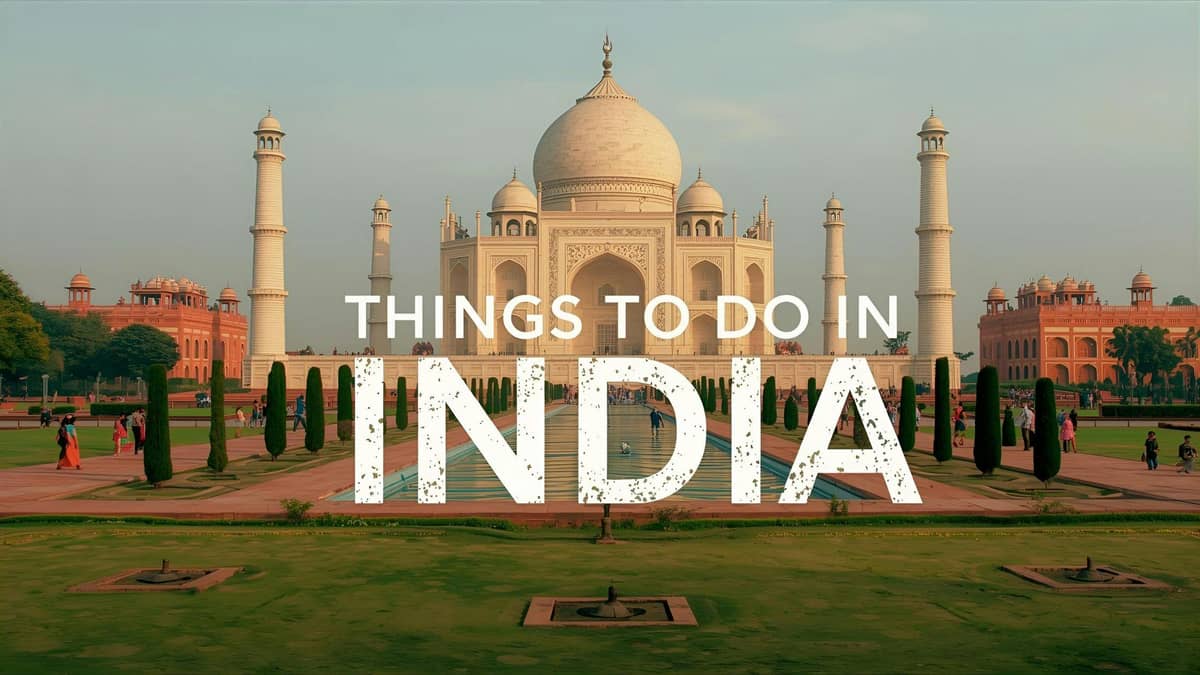
The Taj Mahal in Agra was built by Mughal Emperor Shah Jahan between 1631 and 1648 as a mausoleum for his wife Mumtaz Mahal, who died in childbirth. Constructed over 17 years using 20,000 artisans, 1,000 elephants, and white marble transported from Rajasthan, it is considered the supreme example of Mughal architecture and one of the New Seven Wonders of the World. The complex is perfectly symmetrical — the main tomb reflected in a long central pool, flanked by a mosque and guest house, enclosed by a red sandstone gateway.
The Taj Mahal changes character throughout the day — rose-pink at sunrise, white at noon, gold at sunset, and silver-grey under moonlight. Sunrise is the most spectacular and least crowded time — the mist from the Yamuna River frequently hangs at the base of the complex, giving the white marble an ethereal quality.
- Entry: ₹50 (Indians), ₹1,100 (foreigners); ASI composite Agra ticket (Taj + Agra Fort + Fatehpur Sikri) ₹1,580 for foreigners
- Timings: Sunrise to sunset, Saturday–Thursday; closed Friday
- Getting there: Agra is 200 km from Delhi — 2 hrs by Gatimaan Express train (₹755–₹1,505 AC chair car)
- Tip: Enter the east or west gate rather than the south gate — shorter queues. Dawn visit (gates open at sunrise) requires advance booking of the timed entry slot online at asi.payumoney.com.
2. Varanasi — The World's Oldest Living City
Varanasi (Kashi, Banaras) on the Ganges River in Uttar Pradesh is considered the oldest continuously inhabited city in the world — estimated to have been continuously occupied for at least 3,000 years, and sacred to Hindus as the city of Lord Shiva. The 84 ghats (stone steps) descending to the Ganges are one of the great urban spectacles of the world — simultaneously a place of bathing, cremation, prayer, yoga, and the morning washing of laundry.
The Ganga Aarti ceremony at Dashashwamedh Ghat — held every evening at sunset, with hundreds of priests simultaneously wielding flaming lamps, incense, and conch shells to the chant of devotional music — is the single most atmospheric ritual in India. Free to watch from the ghat or from a rowing boat on the river.
The cremation ghats (Manikarnika and Harischandra) cremate approximately 80–100 bodies daily, 24 hours a day — they have done so for thousands of years. The fires are never extinguished. Photography is not permitted.
- Ganga Aarti: Free; nightly at sunset (approximately 6 PM in winter, 7 PM in summer)
- Sunrise boat ride: ₹300–₹600 for a 1-hour rowing boat along the ghats — the most beautiful way to see Varanasi
- Getting there: Varanasi Junction (BSB) — overnight trains from Delhi (Shiv Ganga Express, 10.5 hrs, from ₹400 sleeper)
3. Delhi — Qutb Minar, Red Fort, and Old Delhi
India's capital spans 3,000 years of history from the pre-Mughal Rajput kingdoms through the Mughal Empire, British Raj, and modern republic. The essential Delhi sites:
Qutb Minar (1193 AD) — India's oldest Islamic monument and a UNESCO World Heritage Site; the 72.5-metre minaret is the world's tallest brick minaret. Entry ₹35/₹550.
Red Fort — Shah Jahan's 17th-century Mughal palace-fortress where India's Prime Minister hoists the national flag every Independence Day (15 August). Entry ₹35/₹600.
Humayun's Tomb (1572) — the precursor to the Taj Mahal's design; UNESCO World Heritage Site; often uncrowded. Entry ₹35/₹600.
Old Delhi's Chandni Chowk — the 17th-century market street opposite Red Fort; 1,500+ shops, 22 specialised lanes (spices, sari fabrics, street food, jewellery), and the legendary Paranthe Wali Gali (alley of fried breads).
4. Rajasthan — The Golden Triangle and Desert Fortresses
Rajasthan contains India's most concentrated heritage landscape — the "Golden Triangle" (Delhi–Agra–Jaipur) plus the Desert Triangle (Jaisalmer–Jodhpur–Udaipur). Key experiences:
Jaipur — the Pink City, founded 1727, India's first planned city, 2019 UNESCO status. Amber Fort (₹100/₹500), Hawa Mahal (953 windows, ₹50/₹200), City Palace, and Jantar Mantar.
Jodhpur — the Blue City; Mehrangarh Fort (one of India's largest, rising 125 metres from a rocky outcrop; ₹600 foreigners); old city blue-painted houses of the Brahmin quarter.
Udaipur — the Venice of the East; Lake Pichola, City Palace (largest in Rajasthan), and a boat ride to Jag Mandir (₹400).
Jaisalmer — the Golden City; 12th-century sandstone fort that is the world's largest fully inhabited medieval fort (3,000 residents live within the walls); camel safaris into the Thar Desert.
5. Tiger Safari — Ranthambore, Kanha, Bandhavgarh
India has the world's largest wild tiger population — approximately 3,700 tigers (70% of the global count), according to the 2022 All India Tiger Estimation. The best parks for sighting probability:
Ranthambore National Park (Rajasthan) — the most famous; tigers regularly seen in daylight near the old Ranthambore Fort ruins; 2–3 hour jeep safaris ₹1,000–₹1,500 per person. Book online 90 days in advance for peak season.
Kanha National Park (Madhya Pradesh) — the inspiration for Rudyard Kipling's The Jungle Book; larger forest area, slightly lower sighting frequency but magnificent sal forest scenery.
Bandhavgarh National Park (Madhya Pradesh) — highest tiger density per square kilometre of any Indian park; smaller area means more reliable sightings.
- Best time: October to June; April–May has highest sighting probability (tigers visit water sources more frequently in heat)
West India
6. Goa — Beaches, Colonial Heritage and Food
Goa, India's smallest state, was a Portuguese colony from 1510 to 1961 — the longest European colonial presence in Asia outside of Macau. The Portuguese heritage is visible in Goa's Latin Quarter (Panjim's Fontainhas neighbourhood), its baroque Catholic churches, and its cuisine (vindaloo, xacuti, bebinca — all Portuguese-Indian hybrids).
Beaches: North Goa (Baga, Calangute, Anjuna) for nightlife and beach shacks; South Goa (Palolem, Agonda, Patnem) for quieter, cleaner, less-developed coves.
Old Goa's churches — Basilica of Bom Jesus (containing the preserved body of St. Francis Xavier, displayed every 10 years) and Sé Cathedral (one of the largest churches in Asia) — are UNESCO World Heritage Sites.
- Best time: November to February
7. Mumbai — Financial Capital and Film City
India's largest city (21 million population) and economic capital — home to Bollywood (the world's most prolific film industry by number of films), Dharavi (one of Asia's most densely populated urban areas), the Gateway of India (1924), and the Taj Mahal Palace Hotel (1903).
Key experiences: Chhatrapati Shivaji Maharaj Terminus (Victoria Terminus — the finest example of Victorian Gothic architecture in Asia, UNESCO Heritage; free exterior), Elephanta Caves (UNESCO — 5th-6th century rock-cut Shiva temple on an island in Mumbai Harbour; ₹40/₹600 + boat ₹180 return), Dharavi slum walk (with responsible tour operators from ₹600).
South India
8. Kerala — God's Own Country
Kerala's backwaters — a 900 km network of interconnected lakes, rivers, and lagoons parallel to the Arabian Sea coast — are unique in India. A houseboat (kettuvallam) overnight on Vembanad Lake (departing from Alleppey/Alappuzha) is one of India's finest travel experiences: watching rice paddies, Chinese fishing nets, and coconut groves drift past from a teak-decked boat.
Kerala also has the best Ayurvedic spa culture in India, the finest tea estates (Munnar, at 1,600m elevation in the Western Ghats), and the Periyar Wildlife Sanctuary (wild elephants, sloth bears; boat safaris on Periyar Lake ₹150–₹400).
- Houseboat cost: ₹5,000–₹15,000 per night for a 2-bedroom boat (includes all meals)
- Best time: October to February
9. Tamil Nadu — Living Temple Cities
Tamil Nadu's Dravidian temple architecture is entirely distinct from North India's Mughal heritage — massive gopurams (gateway towers) covered in thousands of painted sculptures rising 50–70 metres above the temple complex. The finest:
Meenakshi Amman Temple (Madurai) — one of the largest temple complexes in India, covering 45 acres with 14 gopurams; a living place of worship with 15,000+ daily visitors; free entry.
Brihadeeswarar Temple (Thanjavur, 1010 AD) — UNESCO World Heritage; the world's tallest temple tower (vimana) at 66 metres at time of construction, built by the Chola emperor Rajaraja I; entry ₹40/₹600.
Shore Temple (Mahabalipuram) — 8th-century granite temple on the Bay of Bengal; UNESCO Heritage; one of India's oldest stone temples.
10. Karnataka — Hampi and Coorg
Hampi (UNESCO World Heritage) — the ruins of Vijayanagara, the wealthiest and most powerful South Indian empire (14th–16th century). The 26 sq km archaeological site contains 1,600 monuments including the Virupaksha Temple (still in worship), the Vittala Temple with its famous stone chariot and musical pillars, and the Royal Enclosure. Best explored by bicycle (rental ₹100–₹150/day). Entry ₹40/₹600.
Coorg (Kodagu) — India's "Scotland" — coffee and tea estates in the Western Ghats, waterfalls, and the Kaveri River source. The rain-soaked hill station receives one of the heaviest rainfalls in India (6,000mm annually) but is spectacular in the dry season (November–March).
East India
11. Darjeeling — Tea Gardens and Himalayan Views
Darjeeling in West Bengal, at 2,042m, offers the finest views of Kanchenjunga (8,586m — the world's third-highest peak) visible from a town in India, combined with the finest tea estates in the world (Darjeeling tea holds a GI certification — one of the first Indian products to receive it). The narrow-gauge Darjeeling Himalayan Railway (UNESCO World Heritage — a 1881 steam train, the "Toy Train") runs from New Jalpaiguri to Darjeeling through tea gardens and mountain villages.
- Toy Train joy ride: ₹1,420 per person return (Darjeeling to Ghum, 1 hour)
- Best time: March–May and September–November for mountain views
12. Odisha — Sun Temple and Temple Circuits
Konark Sun Temple (1250 AD, UNESCO World Heritage) — a 13th-century temple in the form of the sun god Surya's chariot, with 24 intricately carved stone wheels each 3 metres in diameter. Entry ₹40/₹600.
Puri Jagannath Temple — one of Hinduism's four holiest sites (the Char Dham); the Rath Yatra (chariot festival, June–July) draws millions of pilgrims and is one of India's most spectacular religious events. Non-Hindus cannot enter the inner temple.
Himalayan Regions
13. Ladakh — The Last Shangri-La
Ladakh, at 3,500m average elevation in the western Himalayas, is India's most dramatic landscape — a high-altitude cold desert of Buddhist monasteries (gompas), turquoise glacial rivers, and snow-capped 6,000m+ peaks. Key experiences: Pangong Tso (high-altitude lake shared with China, at 4,350m — stunning early morning blue water against barren mountains); Nubra Valley and the double-humped Bactrian camels at Hunder sand dunes; Thikse Monastery (the "Tibetan Potala" of Ladakh); and the world's highest motorable road, Khardung La (5,359m).
- Permits: Inner Line Permit required for Nubra, Pangong, and Tso Moriri (₹400–₹600, obtainable in Leh)
- Best time: June to September (Manali–Leh Highway open)
- Getting there: Flights to Leh from Delhi (1 hr, from ₹4,000); or Manali–Leh road (2 days, most dramatic overland journey in India)
14. Manali and Himachal Pradesh
Manali (2,050m) is the starting point for the Rohtang Pass, Spiti Valley, and the Manali–Leh Highway. Winter brings skiing at Solang Valley and Rohtang (November–March); summer brings trekking, river rafting on the Beas (Grade III–IV), and paragliding at Solang. Bir Billing (55 km north) is the world's second-highest paragliding site and the venue for the World Paragliding Championship.
Cultural Experiences
15. Pushkar Camel Fair (November)
The Pushkar Camel Fair (Pushkar Mela) is one of India's largest and most colourful annual events — held over 5 days in November in Rajasthan's only Brahma temple town, combining a livestock fair (50,000+ camels, horses, and cattle traded) with cultural performances, folk music, firework displays, and pilgrimage to Pushkar Lake. International photographers come specifically for this fair.
16. Holi — Festival of Colours (March)
Holi, the Hindu spring festival, is celebrated most intensely in the Braj region (Mathura, Vrindavan, Barsana) where the tradition originates — a week before the national celebration day, Barsana's Lathmar Holi sees women playfully "beating" men with bamboo sticks as part of an ancient local tradition. Mathura and Vrindavan are 50 km from Agra.
17. Kumbh Mela — World's Largest Human Gathering
The Kumbh Mela is a Hindu pilgrimage held in rotation at four river sites — Prayagraj, Haridwar, Nashik, and Ujjain — on a 12-year cycle. The Maha Kumbh at Prayagraj (confluence of the Ganges, Yamuna, and mythical Saraswati rivers) is the world's largest peaceful human gathering — 400+ million pilgrims over 45 days at the 2013 Allahabad Maha Kumbh; the 2025 Prayagraj Maha Kumbh is one of the largest events in human history.
India Visitor Type Guide
Visitor Type | Region | Top Experiences |
|---|---|---|
First-time visitors | North India | Golden Triangle (Delhi–Agra–Jaipur), Varanasi |
History lovers | Rajasthan, Karnataka | Rajasthan forts, Hampi, Ellora–Ajanta Caves |
Wildlife | Madhya Pradesh, Rajasthan | Ranthambore, Kanha, Bandhavgarh tiger safaris |
Beaches | Goa, Kerala, Andaman | Goa beaches, Kerala backwaters, Havelock Island |
Adventure | Himachal Pradesh, Ladakh | Ladakh road trip, Manali trekking, white-water rafting |
Spirituality | Uttar Pradesh, Rajasthan, Tamil Nadu | Varanasi, Pushkar, Madurai temples |
Food | Kerala, Tamil Nadu, Punjab | Kerala seafood & Ayurveda, Tamil Chettinad, Amritsari kulcha |
Luxury | Rajasthan, Kerala | Heritage palace hotels, Kerala Ayurveda resorts |
Practical Information for Travelers
A little planning goes a long way in ensuring a smooth and enjoyable trip.
How to Choose Your Activities
India is huge. Don't try to do everything in one trip.
- First-time visitors (7-10 days): Focus on the "Golden Triangle" (Delhi, Agra, Jaipur) and perhaps add Varanasi or Rishikesh.
- Nature & Adventure Lovers (14+ days): Combine the Himalayas (Ladakh or Himachal) with a wildlife park (Ranthambore) or the beaches of Goa.
- Wellness & Relaxation (7-10 days): A Kerala-focused trip is perfect, combining Ayurveda, backwaters, and tea plantations.
What to Pack for Different Activities
- Trekking: Good hiking boots, layered clothing, a warm jacket, sunscreen, and a reusable water bottle.
- Temple Visits: Modest clothing that covers shoulders and knees. You will often need to remove your shoes, so slip-ons are helpful.
- General: Comfortable walking shoes, a scarf (for sun, dust, and modesty), medications, and a power adapter.
Not sure when to go? Find the best time to visit India and plan your perfect adventure across seasons, festivals, and landscapes.
Budgeting for Activities
Costs can vary widely.
Your budget for activities in India can be tailored to your travel style, with options available for every kind of traveler. Here’s a rough estimate of what you can expect to spend :
- Budget Travel (Approx. ₹1,500 - ₹3,000 per day): This tier focuses on authentic, local experiences. Enjoy delicious street food for ₹80-₹250 per meal, use affordable local transport like buses and auto-rickshaws, and explore many free sights such as the ghats in Varanasi, public beaches, and temples with no entry fee.
- Mid-Range Travel (Approx. ₹2,500 - ₹6,500 per day): This offers a comfortable and convenient experience. You can stay in decent hotels or guesthouses for ₹2,500-₹6,500 per night, join guided day tours for ₹2,500-₹4,000, and enjoy meals at good restaurants for ₹400-₹1,200.
- Luxury Travel (Approx. ₹15,000+ per day): For an opulent and hassle-free journey, India offers world-class luxury. Stay in heritage palace hotels starting from ₹15,000 per night, embark on luxury train journeys like the Palace on Wheels that can cost ₹40,000+ per night, hire a private car with a driver for ₹4,000-₹8,000 per day, and book exclusive experiences such as a private tiger safari for ₹8,000-₹15,000 per jeep drive.
Booking Tips & Safety
- Book in Advance: For popular trains, luxury hotels, and specific tours (like tiger safaris), book several months in advance.
- Choose Reliable Operators: For adventure sports, always check for safety certifications and read recent reviews. Use government-approved guides at historical sites.
- Health & Safety: Drink only bottled or filtered water. Be cautious with street food; choose stalls that are busy with a high turnover. Keep your valuables secure.
Sample Activity-Based Itineraries
The Culture Lover's 10-Day Itinerary:
- Days 1-3: Delhi - Explore Red Fort, Jama Masjid, Humayun's Tomb, and the bustling markets of Old Delhi.
- Days 4-5: Agra - Sunrise at the Taj Mahal, visit Agra Fort, and see the "Baby Taj" (Itimad-ud-Daulah).
- Days 6-8: Jaipur - Amber Fort, City Palace, Hawa Mahal, and Jantar Mantar.
- Days 9-10: Varanasi - Morning boat ride, evening Ganga Aarti, and a walk through the old city before flying out.
The Adventure Seeker's 14-Day Itinerary:
- Days 1-4: Rishikesh - White-water rafting, bungee jumping, yoga classes, and camping by the river.
- Days 5-10: Ladakh - Fly to Leh, acclimatize for 2 days, then embark on a 4-day trek (like the Markha Valley Trek).
- Days 11-14: Goa - Fly to Goa for scuba diving, parasailing, and relaxing on the beach to unwind.
The Wellness & Relaxation 7-Day Itinerary:
- Days 1-5: Kerala - Stay at an Ayurvedic resort near Alleppey or Varkala. Undergo treatments, practice yoga, and take a day trip on a houseboat through the backwaters.
- Days 6-7: Munnar - Travel to the hills for a stay at a tea plantation, enjoy nature walks, and breathe in the clean mountain air.
FAQ's
Final Thoughts
India is a land of endless discovery, where every corner reveals a new story and every experience transforms the traveler. From the iconic Taj Mahal to the serene backwaters of Kerala, the incredible array of places to visit in India promises a journey unlike any other. It's a destination where ancient culture, vibrant festivals, and breathtaking landscapes create memories that last a lifetime.
To experience this magnificent country at its best, planning is key. The best time to visit India is during the cooler, dry months from October to March, when the weather is perfect for exploring everything from royal forts to wildlife sanctuaries.
For those ready to embark on this incredible journey, Travelfika offers expertly crafted India Tour Packages that seamlessly blend iconic sights with unique local experiences. Whether you're drawn to cultural immersion, adventurous activities, or spiritual retreats, let Travelfika create your perfect Indian adventure. Discover the magic of India Travel Guide with tailored itineraries and hassle-free travel planning.
Visit Travelfika today to plan your unforgettable Indian journey!