IND: +91 9629929970
 USA: +1 (415) 718-2654
Things to Do in Istanbul: 20 Best Experiences Across Europe & Asia
Quick Answer
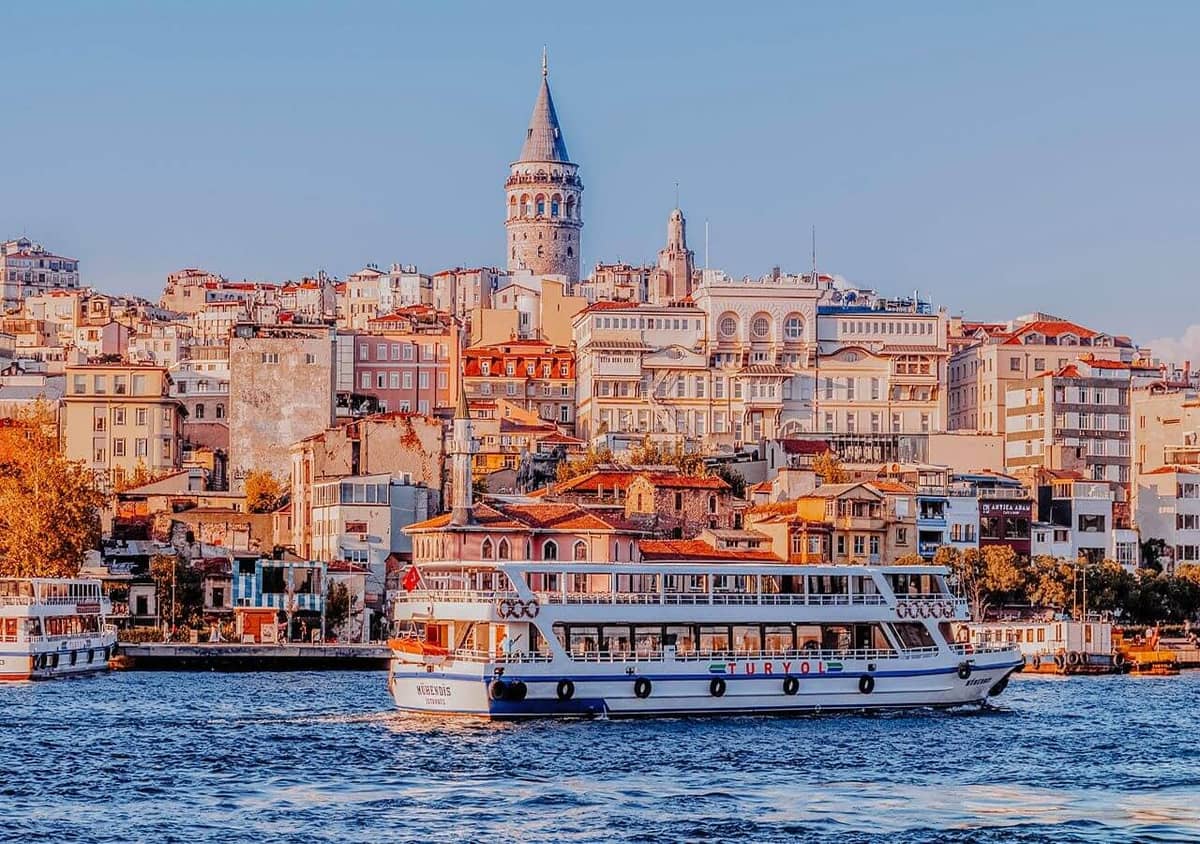
Istanbul is the only city in the world that spans two continents, Europe and Asia, divided by the Bosphorus strait. The essential experiences are Hagia Sophia (built 537 AD, the world's largest cathedral for nearly 1,000 years, now a mosque — €15), Topkapi Palace (seat of the Ottoman Empire for 400 years — €12), Basilica Cistern (underground Roman reservoir with 336 marble columns — €25), a Bosphorus cruise (€5–€25), the Grand Bazaar (one of the world's largest covered markets, 4,000 shops, free), and crossing to the Asian side at Kadıköy (€0.40 ferry, world's only inter-continental commute). Best overall time: April–May and September–October. |
|---|
Hagia Sophia — 1,500 Years of History in a Single Building
Hagia Sophia (Ayasofya) is one of the most remarkable buildings in human history — the only structure to have served as a cathedral, mosque, museum, and mosque again within its lifetime. Commissioned by Byzantine Emperor Justinian I and completed in 537 AD, it served as the world's largest cathedral for nearly 1,000 years until the Ottoman conquest of Constantinople in 1453, when Sultan Mehmed II converted it into a mosque. In 1934 it became a secular museum under Atatürk's republic; in 2020 it was reconverted to a mosque by presidential decree. It is a UNESCO World Heritage Site.
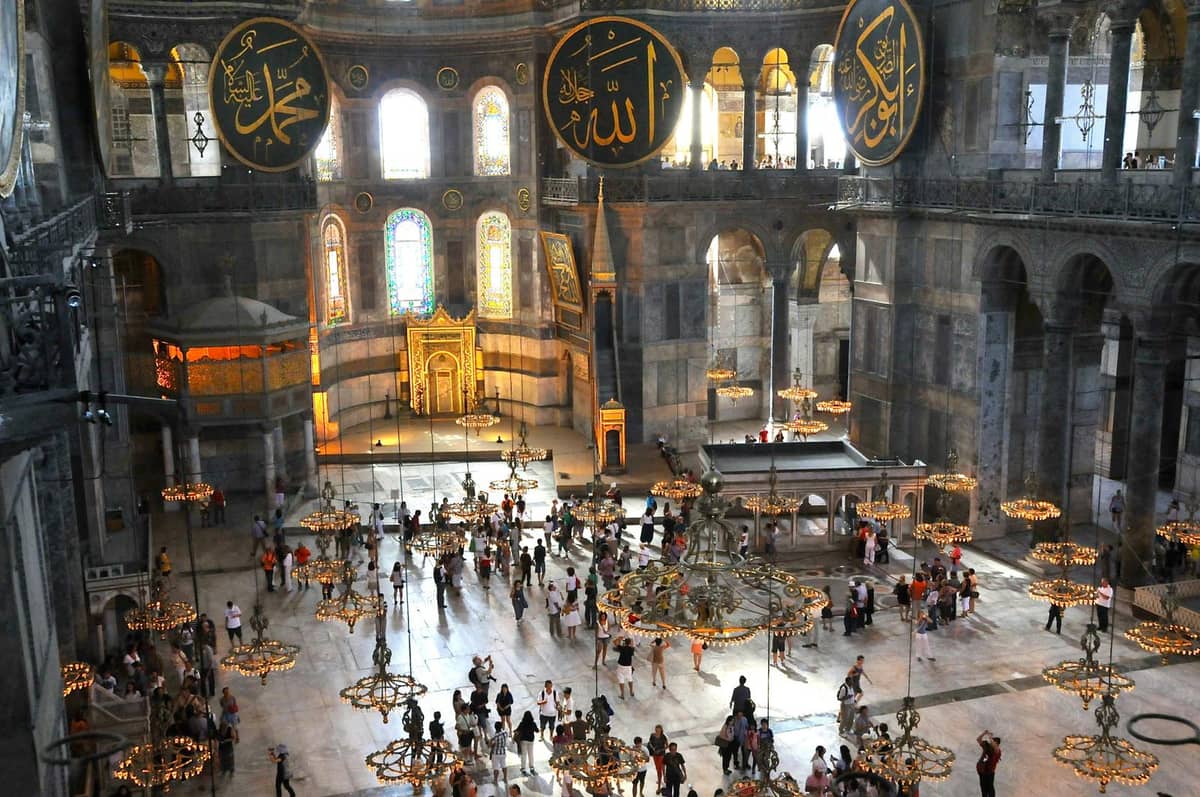
The 55-metre dome — described by the Byzantine historian Procopius as "suspended from heaven by a golden chain" — was the world's largest for nearly a millennium and remains an engineering masterpiece. Inside: sixth-century Christian mosaics are partly covered by Islamic calligraphic roundels, 8.5 metres in diameter. Byzantine emperor portraits and Quranic inscriptions occupy the same walls. The visual collision of two civilisations is extraordinary.
- Entry: €15 adults; free for Muslim visitors entering for prayer
- Timings: 9 AM – 5 PM (closed during five daily prayer times — approximately 30 minutes each)
- Dress code: Shoulders and knees covered; women must cover hair (scarves available at entrance); shoes removed
- Tip: Visit at 9 AM on a weekday for the least crowded experience. The upper gallery mosaics — particularly the Deësis mosaic (Christ flanked by the Virgin and John the Baptist, 13th century) — are among the finest in Byzantine art and often missed by visitors who stay on the ground floor.
Topkapi Palace — Seat of the Ottoman Empire
Topkapi Palace was the administrative and residential centre of the Ottoman Empire for nearly 400 years (1465–1856) — home to 36 sultans, housing 5,000 people at its peak, and governing an empire stretching from Hungary to the Persian Gulf. The palace complex covers 700,000 square metres on a promontory overlooking the Bosphorus, Sea of Marmara, and Golden Horn — the most strategically commanding site in Istanbul.
The palace is divided into four courtyards. The Treasury (Fourth Courtyard) contains the 86-carat Spoonmaker's Diamond, the Topkapi Dagger (set with three enormous emeralds), and the hand and cloak of the Prophet Muhammad — among the holiest Islamic relics. The Harem (separate €5 ticket) is a labyrinth of 400 rooms housing the sultan's family, concubines, and eunuchs, with extraordinary Iznik-tile decoration.
- Entry: €12 (palace); €5 additional (Harem — book in advance, timed entry)
- Timings: 9 AM – 6 PM; closed Tuesday
- Allow: 3–4 hours minimum for palace; 1 additional hour for Harem
- Tip: The Harem tickets sell out by mid-morning in peak season — book online the evening before. The Fourth Courtyard terrace overlooking the Bosphorus is the finest elevated view in Istanbul and free to access with the palace ticket.
Basilica Cistern — Underground Byzantine Wonder
Built by Emperor Justinian I in 532 AD to supply water to the Great Palace and surrounding buildings, the Basilica Cistern is an underground cathedral of water — 138 metres long, 65 metres wide, supported by 336 marble columns (each 9 metres tall) arranged in 12 rows, drawn from earlier Roman structures. It held 80,000 cubic metres of water. Two columns at the far end rest on carved Medusa heads — one upright, one sideways — whose purpose and origin remain debated by historians.
The cistern was recently renovated and reopened in 2022 with dramatically improved lighting and a new walkway system. The combination of the forest of columns, reflective shallow water, atmospheric lighting, and the famous Medusa bases is genuinely spectacular.
- Entry: €25 adults
- Timings: 9 AM – 10 PM daily (the late opening is unique — excellent for evening visits)
- Tip: Visit after 7 PM for atmospheric low-crowds experience with dramatic lighting. The cistern stays open later than almost any other paid attraction in Istanbul.
Blue Mosque (Sultan Ahmed Mosque)
Completed in 1616 under Sultan Ahmed I, the Blue Mosque (Sultanahmet Camii) is Istanbul's most iconic skyline element — six minarets (the only mosque in Istanbul with six) and a cascading series of domes visible from across the Bosphorus. Its interior is lined with 20,000 hand-painted Iznik tiles in blue and white floral patterns — which give the mosque its popular name.
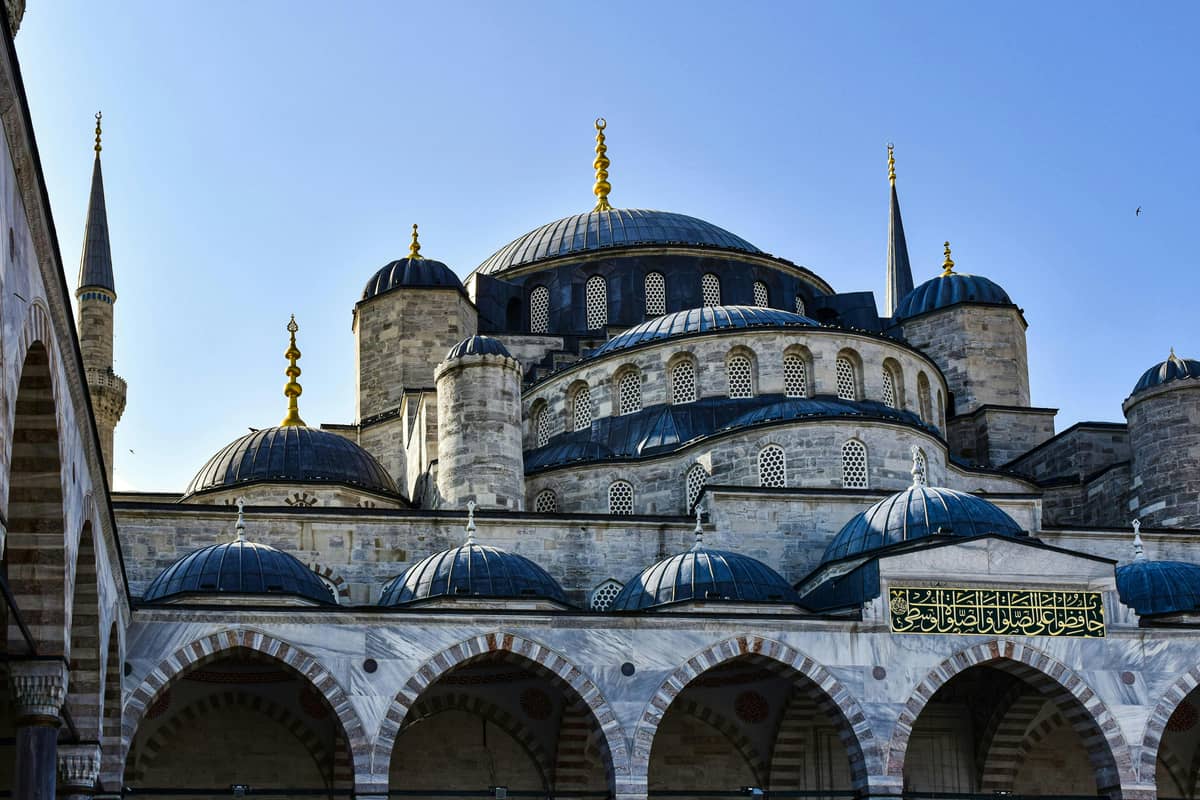
The mosque is an active place of worship. Entry for non-Muslim visitors is free but restricted to non-prayer times. Restoration work has been ongoing since 2017; portions of the interior may be screened, but the main prayer hall and tile work are visible.
- Entry: Free (donations welcome)
- Timings: Open to visitors 9 AM–6 PM; closed during five daily prayers (approx. 30 min each); closed Friday morning prayer
- Dress code: Shoulders and knees covered; women must cover hair; shoes removed
- Tip: Visit Hagia Sophia and the Blue Mosque on the same morning — they are 200 metres apart. The contrast between their interiors (Byzantine grandeur vs Ottoman elegance) is Istanbul's defining cultural experience.
Grand Bazaar — One of the World's Largest Covered Markets
The Grand Bazaar (Kapalıçarşı), established in 1461 by Sultan Mehmed II shortly after the Ottoman conquest, is one of the oldest and largest covered markets in the world — 61 covered streets, 4,000 shops, and an estimated 250,000–400,000 visitors daily. The market specialises in gold and silver jewellery, leather, carpets, ceramics, spices, and Turkish textiles.
Prices are negotiable throughout — initial asking prices are typically 2–3x the fair value. The best quality items are in the interior streets away from the main entrance gates; the outer ring closest to the gates has the most tourist-facing merchandise. The market's architectural structure — vaulted ceilings, painted arches, and ornate gateways — is itself worth seeing regardless of shopping intent.
- Entry: Free
- Timings: Monday–Saturday 9 AM – 7 PM; closed Sunday and public holidays
- Tip: Enter through the Beyazıt Gate (Nuruosmaniye Caddesi side) rather than the tourist-facing main gates. The jewellery streets (Kalpakçılar Başı Caddesi) are the most visually impressive and the most concentrated quality shopping.
Bosphorus Cruise — Between Two Continents
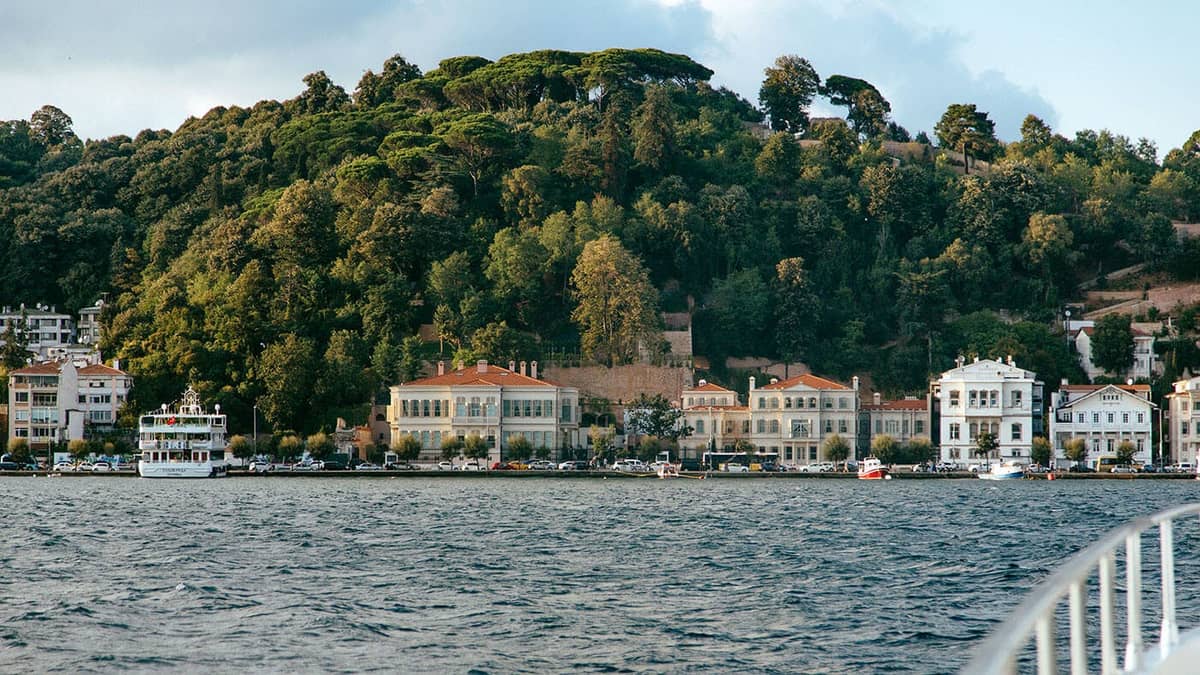
The Bosphorus is the 31-kilometre strait dividing Europe and Asia — one of the world's most strategically important waterways, carrying 50,000 ships per year (more than the Suez and Panama canals combined). A cruise along it passes Ottoman palaces (Dolmabahçe, Beylerbeyi), 19th-century wooden waterfront mansions (yalıs), Rumeli and Anadolu fortresses, and the two suspension bridges connecting the continents.
Public ferry (most authentic, cheapest): The Şehir Hatları ferry from Eminönü or Karaköy operates a 2-hour Bosphorus tour for approximately €5. The same company runs commuter ferries to the Asian side (€0.40, 20 minutes) — one of the world's most beautiful and inexpensive urban transit experiences.
Private/tour cruises: 2–3 hour guided cruises with narration from €15–€25. Sunset and dinner cruises from €40–€80.
- Best time: Late afternoon for golden light on the palaces; sunset for the bridges lit up
- Booking: Public ferry at Eminönü pier (no advance booking needed); private tours bookable at Karaköy and Eminönü piers or via GetYourGuide/Klook
Spice Bazaar (Egyptian Bazaar)
Built in 1664 as part of the New Mosque complex to generate rental income for its upkeep, the Spice Bazaar (Mısır Çarşısı) is smaller and more navigable than the Grand Bazaar — an L-shaped covered market of 88 vaulted shops specialising in spices, dried fruits, Turkish delight (lokum), nuts, teas, and cheese. The outer courtyard has excellent traditional produce stalls. The Bosphorus and Golden Horn views from the nearby Galata Bridge are outstanding at sunset.
- Entry: Free; Monday–Saturday 9 AM–7:30 PM
- Best buys: Saffron (Turkish, significantly cheaper than European prices), sumac, Aleppo pepper, dried apricots, pistachio lokum
Asian Side — Kadıköy and Üsküdar
Istanbul's Asian side is where a large proportion of the city's residents actually live — and visiting it gives a completely different perspective from the tourist-dense European historic peninsula. The €0.40 ferry from Eminönü to Kadıköy (20 minutes) is one of the great urban journeys — crossing between continents for less than a cup of tea.
Kadıköy has Istanbul's best food market (Kadıköy Bazaar — fresh produce, cheese, fish, and spices at local prices), a vibrant independent café and bar scene (Moda neighbourhood), and a more residential, less-touristy atmosphere than Sultanahmet or Beyoğlu.
Üsküdar is more traditional and quiet — the Maiden's Tower (Kız Kulesi), a small Byzantine/Ottoman tower on an island in the Bosphorus, is accessible by ferry from Üsküdar (€8 return). The Çamlıca Hill above Üsküdar has the best panoramic view of Istanbul — both the European and Asian skylines visible simultaneously.
- Ferry: Eminönü → Kadıköy: €0.40, 20 min. Eminönü → Üsküdar: €0.40, 15 min
- Maiden's Tower ferry: €8 return from Üsküdar pier
Beyoğlu, Istiklal Avenue and Galata
Istiklal Caddesi (Independence Avenue) is Istanbul's main pedestrian boulevard — 1.4 km of late-Ottoman and Art Nouveau buildings, restaurants, bookshops, galleries, and music venues, traversed by a historic tram and an estimated 3 million people on weekends. It connects Taksim Square (the symbolic heart of modern Istanbul) to the Galata Tower area.
Galata Tower (built 1348 by the Genoese) is a 67-metre cylindrical tower offering 360° views across the Bosphorus, Golden Horn, and both historic peninsulas from its observation deck. In the evening, the surrounding Karaköy neighbourhood has the best concentration of quality restaurants and bars in Istanbul.
- Galata Tower entry: €6; open 9 AM–9 PM
- Tip: The rooftop restaurant at Galata Tower is overpriced — visit for the view and eat at street level in Karaköy
Chora Church (Kariye Mosque) — World's Finest Byzantine Mosaics
The Chora Church (Kariye Camii), converted to a mosque in 2020, contains the finest surviving Byzantine mosaic and fresco cycles in the world — more complete and better preserved than those in Hagia Sophia. Built in the 11th century and extensively decorated in the 14th century by Theodore Metochites, the mosaics depict the life of Christ and the Virgin Mary in extraordinary detail and colour across every surface of the inner and outer narthex.
- Entry: €8
- Timings: 9 AM – 5 PM; closed Wednesday
- Location: Edirnekapı neighbourhood, 5 km from Sultanahmet (taxi recommended, ~€5–€8)
- Tip: The Anastasis mosaic (Christ descending to Hell) in the apse is considered one of the greatest works of Byzantine art — do not miss it
Dolmabahçe Palace — Where the Ottoman Empire Ended
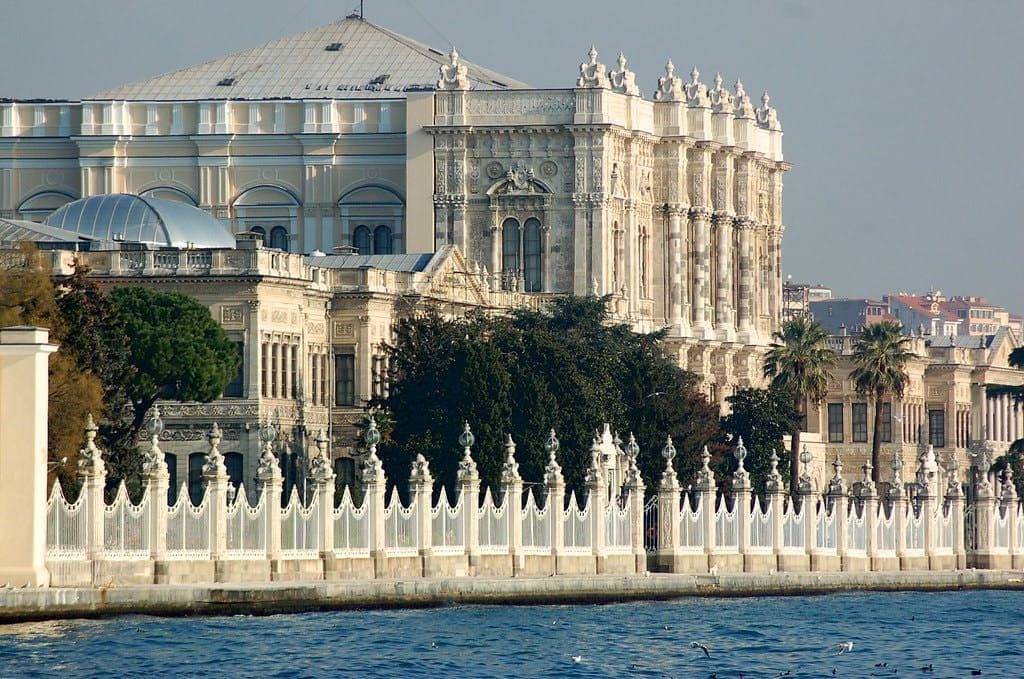
Built 1843–1856 by Sultan Abdulmecid I as a European-style replacement for Topkapi, Dolmabahçe Palace sits directly on the Bosphorus waterfront with a 600-metre marble façade. Its interiors are the most lavish in the Ottoman world: a 4.5-tonne crystal chandelier (the largest in the world, gifted by Queen Victoria), 36 kg of gold leaf on the ceilings, and Baccarat crystal staircases. The palace is also where Atatürk died on 10 November 1938 — his room is preserved exactly as it was on that day.
- Entry: €20 (guided tour only — compulsory)
- Timings: 9 AM – 5 PM; closed Monday and Thursday
- Tip: Pre-book timed entry online — walk-up queues can be 1.5–2 hours in peak season
Turkish Baths (Hamam) — A 500-Year-Old Ritual
Istanbul's historic hamams are among the most atmospheric cultural experiences in the city. The ritual: undress, enter the warm room (tepidarium), lie on the heated marble slab (göbektaşı), be scrubbed with a kese mitt (removes dead skin dramatically), receive a soap foam massage, cool down gradually.
Recommended hamams:
- Çemberlitaş Hamamı (1584, designed by Mimar Sinan) — most historically significant; tourist-facing but authentic facility. Entry + scrub + massage: €50–€70.
- Süleymaniye Hamamı (1557) — inside the Süleymaniye Mosque complex; mixed and separated sections; slightly cheaper and less crowded. Entry + treatment from €40.
Turkish Food in Istanbul
Istanbul's food culture deserves dedicated exploration — the city that connects Middle Eastern, Balkan, and Central Asian culinary traditions.
Must-eat in Istanbul:
- Simit — sesame-crusted bread ring, eaten at breakfast from street carts; €0.30
- Balık ekmek — fresh grilled fish sandwich from boats moored at Galata Bridge; €3–€4
- Döner kebab — the original; Istanbul's döner is made with layered lamb/beef on a vertical spit, served in flatbread with salad; €4–€8 at a decent lokanta
- Meze and rakı — small cold and hot dishes (hummus, stuffed vine leaves, grilled aubergine, white cheese) served with rakı (anise spirit) at a meyhane (traditional tavern) in Karaköy or Balık Pazarı
- Baklava — at Hafız Mustafa (Sirkeci, since 1864) or Karaköy Güllüoğlu (Karaköy) — the best in Istanbul, and among the best in Turkey
- Turkish breakfast — an elaborate spread of cheese, olives, honey, clotted cream, eggs, and bread; best experienced at a dedicated breakfast restaurant in Beyoğlu or Kadıköy; €8–€15 per person
Practical Information
Istanbulkart — Essential Transport Card
The Istanbulkart is a rechargeable contactless card covering all Istanbul public transport: metro, tram, bus, funicular, Bosphorus ferry, and Marmaray (undersea rail). Single fare: €0.40 (dramatically cheaper than single-use tickets). The card costs €1 to purchase at any metro station or kiosk. A day of extensive transport across both sides of the city costs €3–€5.
Key Transport Lines
- T1 Tram: Bağcılar → Kabataş; passes Sultanahmet, Grand Bazaar, Karaköy — the single most useful line for tourists
- F1 Funicular: Kabataş → Taksim (1 minute — the shortest funicular in the world)
- Ferries: Eminönü → Kadıköy (Asian side), Eminönü → Üsküdar, Karaköy → Kadıköy
- M2 Metro: Taksim → airport connections
Getting to Istanbul
- Istanbul Airport (IST): 35–45 km from city centre; Havaist bus to Taksim (€5, 45–75 min depending on traffic); taxi €25–€40
- Sabiha Gökçen Airport (SAW): On the Asian side, 50 km from Sultanahmet; Havabus to Taksim (€10, 1–1.5 hrs)
Best Neighbourhoods to Stay
- Sultanahmet: Walking distance to all historic sites; touristy but convenient; boutique hotels in restored Ottoman buildings from €60–€150/night
- Beyoğlu / Galata / Karaköy: More local feel; excellent restaurants; 15-min tram to Sultanahmet; best for repeat visitors or those prioritising food and nightlife
- Kadıköy (Asian side): Most authentic neighbourhood experience; 20-min ferry from everything; cheapest accommodation
Things to Do in Istanbul at Night
Bosphorus Night Cruise
A Bosphorus night cruise is a must when visiting Istanbul after dark. The cruise takes you along the Bosphorus Strait, where you can admire the city’s stunning skyline. As the city lights reflect on the water, you’ll get amazing views of landmarks like the Topkapi Palace, Hagia Sophia, and the famous Bosphorus Bridge. It's a peaceful and beautiful way to enjoy the city’s magic at night.
Visit Istanbul’s Rooftop Bars
Istanbul’s rooftop bars are a great way to enjoy the vibrant nightlife in Istanbul. You can sip on cocktails while enjoying spectacular views of the city. Many rooftop bars offer stunning panoramic views of the Bosphorus, the old city, and the modern skyline. The atmosphere is lively and perfect for both relaxing and having fun with friends. Don’t miss out on this unforgettable experience when in Istanbul at night.
Whirling Dervishes Show
If you’re looking for something cultural, the Whirling Dervishes show is an experience you shouldn’t miss. The Sufi tradition of whirling, or turning, represents a form of spiritual meditation. Watching the dervishes dance in their colorful costumes while the music plays is both mesmerizing and enlightening. It’s a unique way to experience the deep cultural and spiritual traditions of Turkey, unforgettable at night.
Explore Istanbul’s Night Markets
Istanbul’s night markets are a great place to explore and enjoy the city after dark. You’ll find local food stalls, shops selling handmade jewelry, clothes, and souvenirs. The atmosphere is vibrant and full of life, with street musicians adding to the fun. It’s the perfect place to try some Turkish street food, like a warm simit (Turkish bagel) or a sweet baklava, while shopping for unique gifts.
Visit Sultanahmet Square at Night
Sultanahmet Square is magical at night, with the Blue Mosque and Hagia Sophia beautifully lit. Without the crowds, you can wander around this historic area at a leisurely pace, admiring the stunning architecture. The peaceful environment makes it a great spot for taking photos and enjoying the beauty of Istanbul’s ancient landmarks. The square’s charm shines once the sun sets and the city quiets down.
Dinner at a Traditional Turkish Restaurant
After a long day of exploring, sit down for a traditional Turkish dinner at one of Istanbul’s famous restaurants. Turkish food is full of flavor, with dishes like kebabs, mezes (small appetizers), and delicious baklava for dessert. The warm hospitality of Turkish people will make you feel like part of the family. Dining in a traditional restaurant in Istanbul will make your night even more special.
Take a Stroll Across Galata Bridge
The Galata Bridge offers a relaxing stroll over the Golden Horn, especially in the evening. As the sun sets, you can watch the city’s lights twinkle across the water. Fishermen line the bridge, offering a unique view of the local culture. The walk from the bridge leads to the famous Galata Tower, where you can see breathtaking views of the city. It's a peaceful and scenic experience after a busy day of sightseeing.
Nighttime Visit to the Grand Bazaar
The Grand Bazaar, one of the oldest and largest covered markets in the world, opens late in the evening. With fewer tourists, it’s a great time to explore its maze of shops. You’ll find everything from jewelry and textiles to souvenirs and antiques. The market is beautifully lit at night, adding to its charm. A visit to the Grand Bazaar at night is a unique way to experience one of Istanbul's most famous attractions.
Istanbul Modern Art Museum at Night
The Istanbul Modern Art Museum often holds late-night events, making it a perfect spot for art lovers looking to explore the modern art scene. You can enjoy exhibitions that showcase contemporary Turkish artists and international pieces. The museum’s location by the Bosphorus adds to the charm of the experience, offering a wonderful way to appreciate art and culture while the city continues to buzz outside.
Live Music at a Local Venue
Istanbul has a lively live music scene, especially at night. Whether you enjoy Turkish folk music, jazz, or international bands, there’s something for every music lover. Local venues across the city feature performances by talented artists. This is one of the best things to do in Istanbul, and experience the cultural mix of Istanbul while enjoying a fun night out. Grab a drink, enjoy the music, and get a taste of the city’s exciting nightlife.
Plan your ideal Istanbul trip effortlessly by going through the Istanbul trip cost, which has tailored itineraries, expert tips, and useful practical insights.
General Tips for Visiting Istanbul
- Learn Basic Turkish Phrases - While many people in Istanbul speak English, learning a few basic Turkish phrases like “Merhaba” (Hello) or “Teşekkür ederim” (Thank you) can be helpful and appreciated by locals.
- Use Istanbulkart for Public Transport - The Istanbulkart is a convenient, rechargeable travel card that works for buses, trams, ferries, and the metro. It saves time and money compared to buying single tickets.
- Dress Modestly for Religious Sites - When visiting mosques, especially the Blue Mosque, dress modestly. Women should cover their heads with a scarf, and both men and women should wear clothing that covers their shoulders and knees.
- Carry Cash and Cards - While most places accept credit cards, it's still a good idea to carry some Turkish lira in cash for smaller shops, local markets, or street food vendors.
- Be Prepared for Crowds at Tourist Spots - Major attractions like the Hagia Sophia and Topkapi Palace can get crowded, especially during peak tourist seasons. Arriving early or visiting during less busy hours can make your experience more pleasant.
- Respect Local Customs - Turkish culture values hospitality, so always be polite and open to interactions with locals. Accept invitations for tea, as it’s a common gesture of friendliness.
Best Time to Visit Istanbul
Spring (April to June) and Fall (September to November) are the best times to visit for mild weather and fewer crowds, perfect for sightseeing and outdoor activities. Summer (July and August) can be hot, but it's lively with events and more tourists. Winter (December to February) is cooler and quieter, ideal for avoiding crowds and exploring cultural sites, with lower hotel prices. For the best nightlife experience, spring and fall offer pleasant weather and fewer tourists
Check out the detailed best time to visit Istanbul for perfect weather, fewer crowds, festivals, and amazing experiences.
Ready for Your Istanbul Trip? Book with Travelfika!
Istanbul is a city where the past and present blend beautifully, offering travelers a unique mix of history, culture, and modern attractions. Whether you're strolling through its ancient streets, enjoying its vibrant nightlife, or savoring delicious Turkish food, there is something for everyone. The city’s diverse experiences, from historical landmarks like the Hagia Sophia to exciting activities like a Bosphorus cruise, make it an unforgettable destination.
If you haven’t yet added Istanbul to your travel list, now is the perfect time. With its rich heritage, stunning architecture, and warm, welcoming people, Istanbul promises to leave you with lasting memories. It’s a place that truly captures the essence of both East and West, making it a must-visit for anyone seeking adventure, culture, and beauty all in one.
Start planning your trip to Istanbul today with Travelfika! Explore our Istanbul tour packages, designed to suit every budget and interest. Whether you’re a history lover, foodie, or adventure seeker, Travelfika will handle all the details, flights, hotels, tours, so you can relax and enjoy the journey.