IND: +91 9629929970
 USA: +1 (415) 718-2654
Best Time to Visit Jodhpur: Month-by-Month Weather, Festivals & Tips
Quick Answer |
|---|
The best time to visit Jodhpur is October to March, when daytime temperatures stay between 10°C and 28°C — ideal for exploring Mehrangarh Fort, the Blue City lanes, Umaid Bhawan Palace, and the desert. October and November are the sweet spot: post-monsoon clarity, the Marwar Festival in October, and fewer crowds than December–January peak season. Avoid April to June (temperatures regularly exceed 43°C). Monsoon (July–September) suits budget travellers and photographers seeking dramatic desert cloudscapes. |
Jodhpur Travel Seasons at a Glance
Season | Months | Temp Range | Crowds | Verdict |
|---|---|---|---|---|
Peak winter | Oct–Mar | 10–28°C | High | Best overall |
Sweet spot | Oct–Nov | 18–28°C | Medium | Best value |
Deep winter | Dec–Jan | 8–22°C | Very high | Best weather |
Spring shoulder | Feb–Mar | 12–30°C | Medium | Good, Holi in March |
Summer | Apr–Jun | 28–43°C+ | Low | Budget only |
Monsoon | Jul–Sep | 25–35°C | Very low | Photography, budget |
Jodhpur Month-by-Month Weather Guide
Month | Avg High (°C) | Avg Low (°C) | Rainfall (mm) | Best For |
|---|---|---|---|---|
January | 22 | 8 | 5 | Heritage sightseeing, RIFF festival |
February | 26 | 11 | 5 | Pleasant sightseeing, World Sacred Spirit Fest |
March | 31 | 16 | 5 | Holi celebrations, early warmth |
April | 37 | 22 | 5 | Budget travel, off-season deals |
May | 41 | 27 | 10 | Early mornings only |
June | 40 | 28 | 30 | Avoid outdoors midday |
July | 36 | 27 | 75 | Monsoon photography, desert green |
August | 33 | 25 | 80 | Budget, lush landscapes |
September | 34 | 24 | 40 | Post-monsoon clarity begins |
October | 33 | 19 | 10 | Marwar Festival, ideal start of peak |
November | 28 | 13 | 5 | Best value month, comfortable all day |
December | 23 | 9 | 5 | Cool, clear skies, peak tourist season |
Weather data based on historical averages. Source: India Meteorological Department (IMD) records for Jodhpur.
Jodhpur Season-by-Season Guide
Winter: October to March — The Best Time to Visit Jodhpur
Winter is unequivocally the best time to visit Jodhpur. Daytime temperatures of 10–28°C allow full-day outdoor exploration without heat stress, and the city's signature blue-painted houses, sandstone forts, and desert panoramas all look their most vivid under clear winter skies. This is the peak tourist season, and most international visitors, heritage travellers, and festival-goers plan their trips during these months.
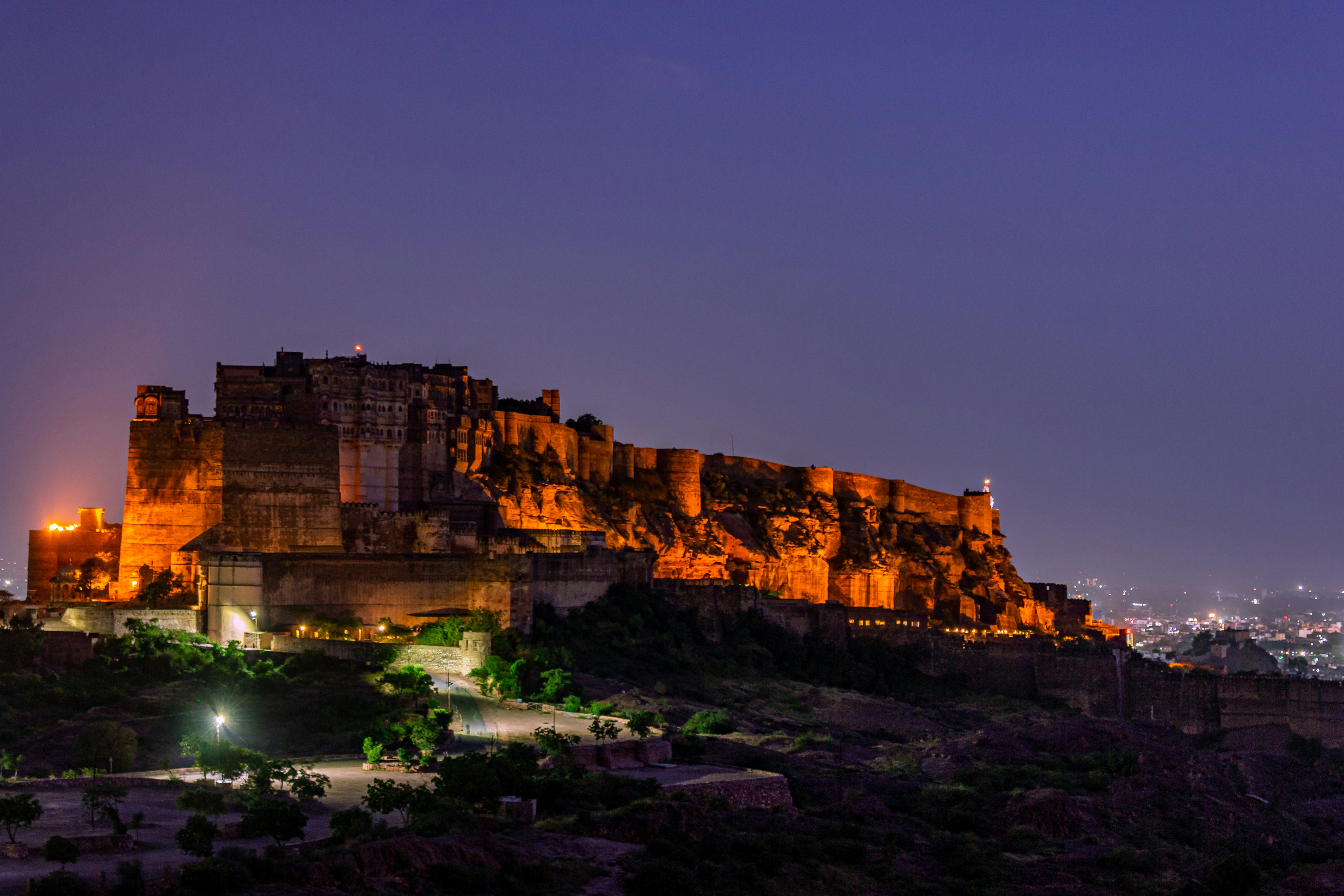
Why winter is best: Mehrangarh Fort's sandstone walls glow amber in the low winter sun. The Old City's narrow lanes and Ghanta Ghar (Clock Tower) market are most comfortable to walk in at this time. Desert activities, camel safaris, village visits, and sunset point photography are only truly enjoyable in cool weather. The Marwar Festival (October), RIFF (October), and World Sacred Spirit Festival (February) all fall in this window.
The trade-off: December and January see the highest hotel prices (30–50% premium over shoulder season) and busiest attractions. Book accommodation 4–6 weeks ahead for December–January visits, especially for heritage properties like Raas Jodhpur or Umaid Bhawan Palace.
Best months within winter:
- October–November: Post-monsoon freshness, lower prices, festivals, fewer international tourists. The ideal combination of good weather, atmosphere, and value.
- December–January: Peak season with the coolest, most pleasant weather. Busy and expensive, but the quintessential Jodhpur experience.
- February–March: Slightly warmer (up to 30°C by March), fewer crowds, Holi in March adds colour and energy. Good shoulder season choice.
Summer: April to June — Off-Season for Budget Travellers
Summer in Jodhpur is extreme by any standard, temperatures regularly reach 43°C in May and June, with hot desert winds (locally called "loo") making afternoons dangerous for outdoor activity. This is Jodhpur's true off-season, and most leisure tourists avoid it.
Who should visit in summer:
- Budget travellers who can structure their days around the heat (explore 6–10 AM and 6–9 PM only)
- Travellers doing a quick overnight stop on a Rajasthan circuit where timing is fixed
- Those specifically interested in indoor heritage experiences (Mehrangarh Fort is air-conditioned in parts; Umaid Bhawan Palace museum is cool throughout)
Budget savings in summer: Hotels drop 30–60% from peak season rates. Heritage havelis that cost ₹8,000–₹15,000 per night in January are available for ₹3,000–₹6,000 in May. The attractions have minimal queues — Mehrangarh Fort, one of India's busiest heritage sites in winter, is nearly empty.
Practical rules for summer visits:
- Start sightseeing by 6:30 AM, Mehrangarh Fort opens at 9 AM but the approach and surrounding lanes are best in early morning
- Complete all outdoor activity by 11 AM; return after 5:30 PM
- Stay hydrated constantly, carry at least 2 litres of water per person at all times
- Wear full-sleeve cotton, a wide-brimmed hat, and apply SPF 50+ sunscreen
Monsoon: July to September — For Photographers and Budget Explorers
Jodhpur's monsoon is characterised by occasional moderate rainfall rather than the heavy continuous rain of coastal India. Total monsoon rainfall is typically 290 mm, modest by Indian standards, spread across 20–25 rain days. The result is a landscape transformation: the brown desert turns green, Balsamand Lake fills, and dramatic storm-light creates extraordinary photography conditions.
Who should visit in monsoon:
- Photographers — the combination of dark storm clouds, green desert, and the blue city provides unique imagery that no other season offers
- Budget travellers — lowest hotel prices of the year; 40–70% below peak rates at premium properties
- Travellers who value solitude — popular sites like Jaswant Thada and the old stepwells are nearly tourist-free
What to be aware of:
- Outdoor desert activities (camel safari, village visits) may be cancelled after heavy rain
- Rooftop dining — one of Jodhpur's great pleasures — is interrupted by rain
- Roads in the old city can flood briefly after heavy showers
- Humidity (60–70%) makes the heat feel heavier than the temperature suggests
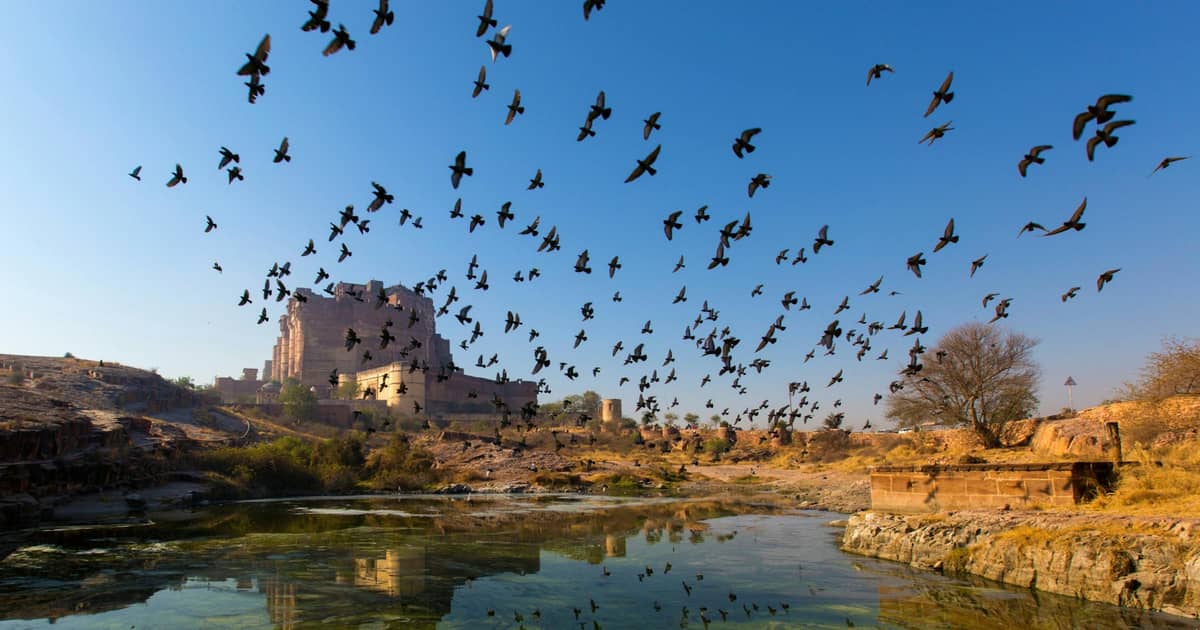
Monsoon photography tip: The Mehrangarh Fort view from Toorji Ka Jhalra stepwell after rain, with dark clouds and wet blue houses, produces one of the most dramatic urban compositions in Rajasthan. Early morning light after a night of rain is the best time to shoot this.
Jodhpur Festivals: When to Visit for Cultural Celebrations
Best Time to Visit Jodhpur by Visitor Type
Visitor Type | Recommended Time | Why |
|---|---|---|
First-time visitors | November–December | Best weather, all attractions open, manageable crowds vs peak |
Photographers | October (post-monsoon) or July–August | Best light and dramatic skies |
Budget travellers | May–June or July–August | 40–70% lower hotel rates |
Festival seekers | October | Two major festivals (Marwar + RIFF) in same month |
Couples / honeymoon | November or February | Pleasant weather, fewer peak crowds, romantic heritage hotels |
Families with children | December–January | Coolest weather, all activities available |
Architecture & heritage | November–February | Best light quality for fort and palace photography |
How to Reach Jodhpur
Jodhpur is well-connected to all major Indian cities by air, rail, and road.
By air:
- Jodhpur Airport (JDH) is 5 km from the city centre
- Direct flights from Delhi (1 hr 15 min), Mumbai (1 hr 40 min), Jaipur (55 min), Bangalore, and Chennai
- Airlines: IndiGo, Air India, SpiceJet; fares from ₹2,500–₹7,000 one way from Delhi in peak season
- Taxi from airport to city centre: ₹250–₹400 (Ola/Uber available)
By train:
- Jodhpur Junction is well connected; key trains include: Delhi to Jodhpur: Mandore Express (12 hrs overnight), Suryanagri Express (11 hrs) — from ₹400 (sleeper) to ₹1,500 (3AC) Jaipur to Jodhpur: Intercity Express (5.5 hrs) — from ₹200–₹700 Mumbai to Jodhpur: Bandra–Jodhpur Express (18 hrs) — from ₹600–₹2,000
- Jodhpur Junction is 1 km from the old city — auto-rickshaws and Ola available outside
By road:
- Jodhpur is on NH62 (Jaipur–Jodhpur: 340 km, ~5.5 hrs by car)
- Delhi to Jodhpur: 600 km, ~9–10 hrs by car; overnight RSRTC Volvo buses from ₹700–₹1,400
- Jaisalmer to Jodhpur: 290 km, ~5 hrs by car or state bus
- Udaipur to Jodhpur: 250 km, ~4.5 hrs by car — excellent for a Rajasthan circuit combining all three cities
What to Pack for Each Season
Winter (October–March):
- Light woolens — a medium-weight fleece or jacket for December–January mornings (can reach 8°C)
- Scarves (serve as sun protection in shoulder months and warmth at night)
- Comfortable walking shoes — Mehrangarh Fort involves significant cobblestone walking
- Sunscreen SPF 30 (UV index still 5–7 in winter)
Summer (April–June):
- Lightweight full-sleeve cotton shirts (blocks UV while allowing airflow)
- Wide-brimmed hat and UV-blocking sunglasses
- Sunscreen SPF 50+
- 2-litre reusable water bottle — dehydration risk is significant
- Light linen trousers rather than shorts (cooler in dry heat and appropriate for heritage sites)
Monsoon (July–September):
- Quick-dry clothing
- Compact umbrella or lightweight rain jacket
- Waterproof footwear or sandals with grip
- Waterproof case or dry bag for camera and phone
- Insect repellent (mosquito activity increases significantly during monsoon)
Jodhpur Travel Tips
Booking lead times by season:
- December–January peak: Book hotels 6–8 weeks ahead; heritage properties like Raas Jodhpur, Ajit Bhawan, and RAAS sell out months ahead
- October (festival season): Book 4–6 weeks ahead
- November, February–March: 2–3 weeks ahead is usually sufficient
- April–September: Walk-in availability at most properties
Getting around Jodhpur:
- Auto-rickshaws: Most practical for old city — negotiate fare before boarding (₹50–₹150 for most old city trips)
- Ola/Uber: Available and reliable for distances over 5 km; better for day trips and airport transfers
- Walking: The old city around Ghanta Ghar, Sardar Market, and Toorji Ka Jhalra is best explored on foot (30-minute walk covers most of the best areas)
- Cycle rickshaws: Available in the old city for slow-paced exploration
Neighbourhoods to stay in:
- Old City / Near Mehrangarh: Most atmospheric; best for heritage havelis and fort views — stay here for a first visit
- Ratanada: Quieter residential area popular with business travellers; 10 min from old city
- Near airport: Convenient for short stopovers
Hygiene and food safety:
- Jodhpur's street food (mirchi vada, mawa kachori, makhaniya lassi, pyaz kachori) is excellent — stick to busy stalls with high turnover
- Sardar Market around the Clock Tower is the best area for street food and evening browsing
- Avoid raw salads and unpeeled fruit from smaller stalls in summer and monsoon
Currency and payments:
- Indian Rupee (INR) — most old-city shops, auto-rickshaws, and small restaurants are cash-only
- ATMs available at all major commercial areas; carry ₹1,000–₹2,000 in smaller notes
- Hotels and major restaurants accept cards and UPI