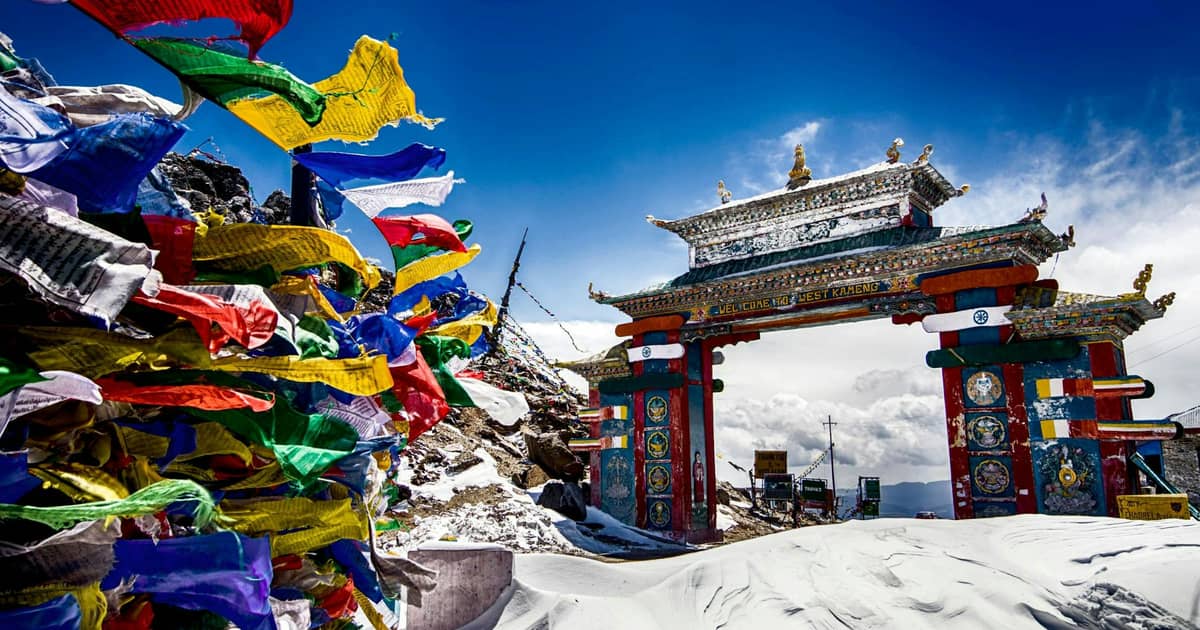
There is a moment, somewhere on the road above Sela Pass at 4,170 metres, when the cloud breaks and you see the valley below Tawang for the first time, a vast bowl of green and brown surrounded by Himalayan ridges, with the Tawang Monastery sitting in the middle of it like something an ancient cartographer would have placed there to mark the end of the known world.
That moment is why people travel to Tawang.
Tawang is a district in the far west of Arunachal Pradesh, sharing borders with Bhutan to the southwest and Tibet to the north. It sits at approximately 3,048 metres above sea level and is home to one of the most significant Buddhist monasteries in Asia, a landscape of remarkably high-altitude lakes, the memory of the 1962 India-China war in its hills and memorials, and a people, the Monpa, whose culture is inseparably intertwined with the Tibetan Buddhist tradition.
Until recently, Tawang was known primarily to serious travellers and military enthusiasts. In 2026, it is one of the fastest-rising destinations in India. New road infrastructure, improved accommodation, and word of mouth from the growing wave of Northeast India travellers have put it firmly on the mainstream travel map — while it remains, for now, genuinely unhurried and unhyped compared to the attention it deserves.
This guide covers everything. The ILP. The route. The road. The monastery. The lakes. The border. The cost. The itinerary. Everything.
This is the first thing to sort, and the thing most travel articles handle poorly. Let us be precise.
Tawang is in Arunachal Pradesh, which requires an Inner Line Permit (ILP) for all visitors who are not residents of Arunachal Pradesh. This applies to:
Without a valid ILP, you will not be allowed past the Bhalukpong checkpoint on the Assam–Arunachal Pradesh border. There are no exceptions.
Website: arunachalpradesh.gov.in/ilp (official government portal)
Steps:
Processing time: Typically 1–3 working days, but can be as fast as same-day during high season. Apply at least 7 days before travel to be safe, and always carry the printed physical copy.
If you are travelling from Delhi, you can also obtain the ILP in person from:
Office of the Resident Commissioner, Arunachal Pradesh
Kautilya Marg, Chanakyapuri, New Delhi – 110021
Working hours: Monday–Friday, 10 AM – 5 PM
Processing time: Same day if you go in person in the morning.
The Arunachal Pradesh Tourism Information Centre at Guwahati's Lokpriya Gopinath Bordoloi International Airport issues ILPs. If you have not obtained one in advance, this is your last convenient option before heading toward Tawang.
In emergencies, ILPs can sometimes be issued at the Bhalukpong checkpost itself (the border between Assam and Arunachal Pradesh). However, this is unreliable, depends on the officer on duty, and is not recommended as a primary plan. Always get your ILP before reaching Bhalukpong.
Detail | Information |
|---|---|
Fee | ₹100 per person |
Validity | Typically issued for the specific travel dates |
Districts covered | State “Tawang” district specifically |
Documents needed | Government ID + passport photo |
Carry physical copy? | Yes — always |
Check-in requirement | At every district checkpost along the route |
Foreign nationals require both an ILP and a Protected Area Permit (PAP) for Tawang, as the area is classified as a Protected Area due to its proximity to the China border.
Tawang has no railway station and no operational airport for commercial flights (a small airstrip exists but is not currently in regular civilian service). The only practical way to reach Tawang is by road.
The standard route is: Guwahati → Tezpur → Bhalukpong → Bomdila → Sela Pass → Tawang
Total distance: ~450 km from Guwahati
Total drive time: 2 days (with overnight at Bomdila or Dirang)
Guwahati is the starting point for almost all Tawang journeys. The drive from Guwahati to Bhalukpong on NH 15 passes through Tezpur (a pleasant town on the Brahmaputra with the Agnigarh Hill viewpoint — worth a 30-minute stop) and into the foothills of Arunachal Pradesh.
Bhalukpong is the checkpost where you present your ILP. The landscape changes dramatically here — from flat Assam plains to the steep-sided forested hills of Arunachal. The air cools perceptibly within minutes of crossing the border.
After Bhalukpong, the road enters the mountains properly. This section passes through Tipi (famous for its orchid research centre — worth a brief stop if orchids interest you), and climbs steadily through dense subtropical forest into pine and fir zones.
Bomdila sits at 2,415 metres and is the standard overnight stop. It has a small Tawang Monastery replica, good views of the Himalayan range on clear mornings, and a range of functional hotels. The town is unremarkable but comfortable — use it purely as a rest stop.
Alternative overnight at Dirang (30 km before Bomdila): Dirang is a more scenic stop with a medieval dzong (fort) and excellent apricot orchards. Several comfortable homestays and eco-lodges make it a better choice if you want more character in your overnight stop.
This is the defining drive of the entire journey. The road from Bomdila climbs relentlessly toward Sela Pass — a glacial lake-studded high mountain pass at 4,170 metres that connects the Bomdila–Dirang valley to the Tawang Valley. It is one of the highest motorable passes in the world and is generally snow-covered from November to March.
Sela Pass in May: The pass is clear of snow by mid-April in most years, but can receive fresh snowfall even in May. Always check current conditions the night before this segment and travel the Sela section before noon to avoid afternoon fog and visibility drops.
The drive from Sela to Tawang descends through extraordinary mountain scenery, forests of rhododendron and pine (rhododendron is in flower from late March to early May), river valleys, and the gradual emergence of the Tawang bowl below.
Arrive in Tawang before dark. Mountain roads in Arunachal Pradesh after dark are genuinely dangerous. Plan your schedule to ensure Sela Pass is crossed by midday at the latest.
Segment | Distance | Approx. Time |
|---|---|---|
Guwahati → Tezpur | 180 km | 3.5 hours |
Tezpur → Bhalukpong | 40 km | 45 min |
Bhalukpong → Dirang | 130 km | 4.5 hours |
Dirang → Sela Pass | 42 km | 1.5 hours |
Sela Pass → Tawang | 78 km | 2.5 hours |
Total Guwahati → Tawang | ~450 km | ~12–14 hrs (over 2 days) |
Shared sumo/taxi from Guwahati: ASTC and private shared taxis depart from Guwahati's interstate bus terminal. Total cost: ₹600–800 per seat. Comfortable, the most common option for solo travellers.
Private taxi from Guwahati: Best option for groups of 3–5. A Tata Sumo or similar 4WD costs ₹12,000–18,000 for a return Guwahati–Tawang journey (negotiable with extra days).
Self-drive: Possible in a 4WD/SUV. A standard sedan is not recommended, roads after Sela Pass can be rough. Carry extra fuel (fill up in Bomdila), offline maps (Sygic India or OsmAnd), and emergency supplies.
Helicopter: Helicopter services from Guwahati to Tawang exist (operated by Pawan Hans) but are limited and frequently weather-cancelled. Check current availability with the Pawan Hans office. Do not plan your entire trip around helicopter availability.
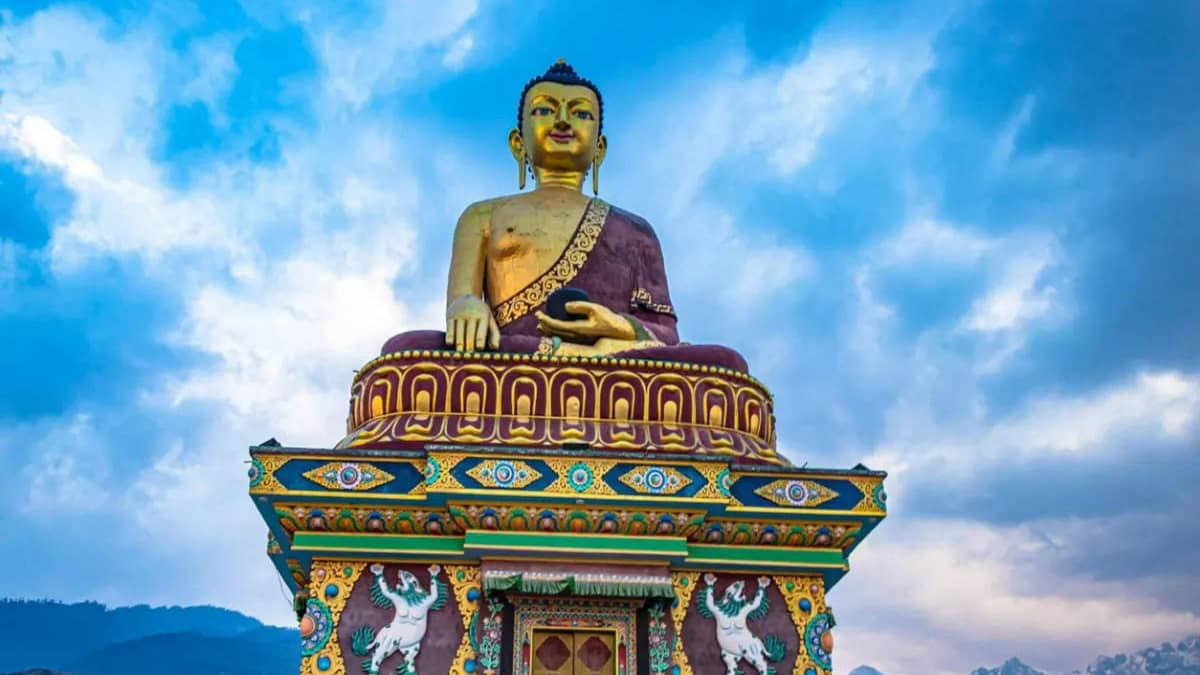
The Tawang Monastery is the reason most people come to Tawang, and it does not disappoint.
Founded in the 17th century by Merak Lama Lodre Gyatso and closely associated with the Fifth Dalai Lama, Tawang Monastery is the largest monastery in India and the second largest in the world after the Potala Palace in Lhasa. It sits on a hilltop above Tawang town at approximately 3,300 metres, visible from the entire valley.
The monastery is a living institution, approximately 500–700 monks reside and study here at any given time. The main prayer hall contains a 28-foot golden statue of Sakyamuni Buddha and a library of rare Tibetan manuscripts, including original Tengyur and Kangyur texts.
Visiting the monastery:
Allow at least 2–3 hours to do the monastery justice. The view from the monastery's outer walls, across the entire Tawang Valley, is one of the finest views in the Northeast.
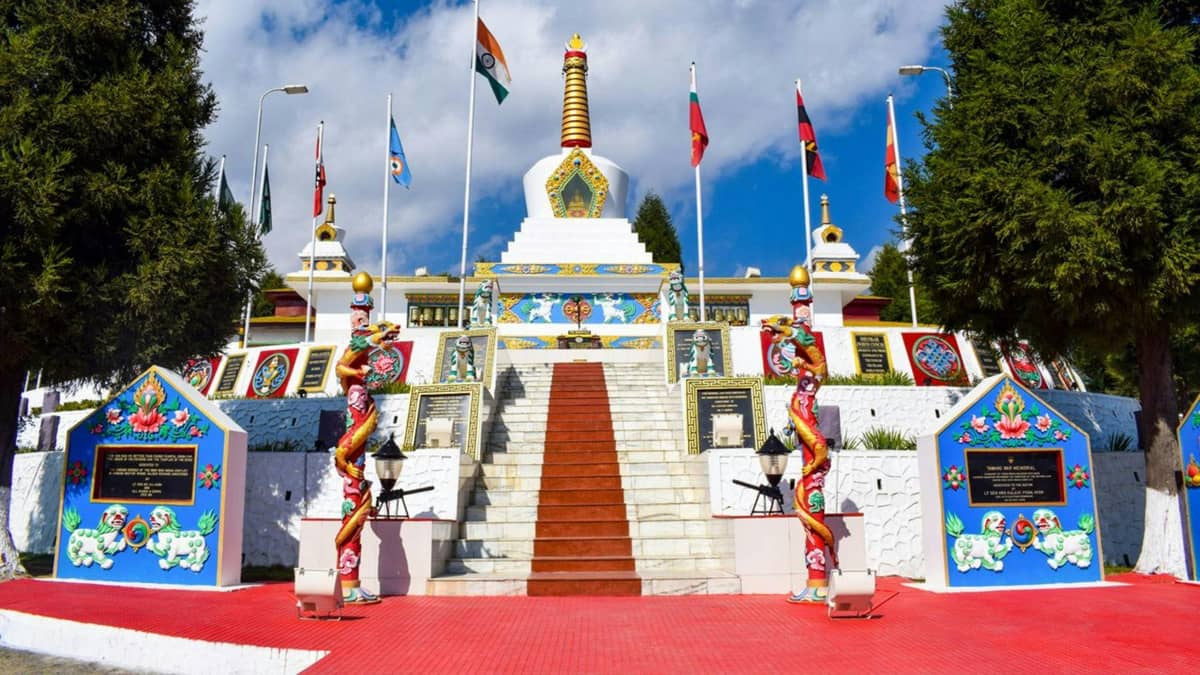
Located on a hilltop just below the monastery, the War Memorial commemorates the Indian soldiers who died in the 1962 Sino-Indian War. The battle for Tawang was one of the most significant engagements of that conflict.
The memorial is maintained by the Indian Army and is genuinely moving, the inscribed names, the location, and the mountain backdrop give it a weight that similar monuments in more accessible places lack. A small sound-and-light show is held in the evenings. Entry is free.
A smaller and less-visited monastery approximately 6 km from Tawang town, Urgelling is historically significant as the birthplace of the sixth Dalai Lama, Tsangyang Gyatso, who was born here in 1683. The monastery has a more intimate atmosphere than the main Tawang Monastery and is less crowded. The caretaker monks are often willing to explain the history of the sixth Dalai Lama, one of the most complex and poetic figures in Tibetan Buddhist history.
The Tibetan Settlement Market in Tawang town sells a mix of Tibetan religious artefacts, local handicrafts, Monpa textiles, Chinese goods (as everywhere near the border), and the excellent local produce including dried yak cheese, thukpa noodles, and chang (barley beer). The market is small but worth an hour of browsing.
Bumla Pass sits directly on the India-China border, 37 km from Tawang town. It is one of the very few points on the Line of Actual Control (LAC) where Indian tourists can approach the border with valid permits.
This is not a standard tourist attraction. Visiting Bumla requires:
Why go: The border experience at Bumla is unlike anything else accessible to Indian tourists — the empty high-altitude landscape, the Chinese watchtower visible across the border, the army jawans standing at the monument, and the sheer geopolitical weight of the location make it one of the most charged travel experiences in India. Plan your Tawang visit to include Bumla if you can.
The road to Bumla passes through P.T. Tso Lake (Pangong Teng Tso) — a high-altitude lake at 4,100 metres that is often compared to Pangong Tso in Ladakh in terms of its deep blue colour and mountain reflections. The lake is entirely within India and freely accessible without special permits.
Located approximately 42 km from Tawang at 3,700 metres, Madhuri Lake gained its colloquial name after actress Madhuri Dixit shot a song sequence here for the 1997 Bollywood film Koyla. The original name is Shungatser or Sangetsar.
The lake is a glacial high-altitude body surrounded by mountains and, in late April and May, by fields of rhododendron in bloom. The reflection of the peaks in the still water makes it one of the most photographed landscapes in Arunachal Pradesh.
Getting there: Requires a 4WD (the road is rough and unpaved in sections). The combined trip to Bumla and Madhuri Lake can be done in a single long day (leave Tawang by 6 AM, Bumla first, Madhuri Lake on the return).
A monastery built against a cliffside about 15 km from Tawang, Taktsang is the most dramatically situated monastery in the Tawang district after the main monastery. The name means "Tiger's Nest", the same name as the famous Bhutanese monastery, reflecting the strong cultural ties between the Monpa people of Tawang and Bhutan. A short but steep walk leads to the monastery entrance.
At 6,488 metres, Gorichen is the highest peak in Arunachal Pradesh and the twelfth highest in India. It is not climbable for general tourists but on clear mornings from elevated points around Tawang, the peak is visible as part of the Himalayan skyline. The best viewpoints are from the Tawang Monastery hilltop and from the road above Sela Pass.
Start from Guwahati by 5:00 AM. Drive via Tezpur — stop for breakfast and visit Agnigarh Hill (30 mins). Cross into Arunachal at Bhalukpong (have ILP ready). Drive through the Kameng valley forests. Stop briefly at the Tipi Orchid Research Centre if orchid season (September–November). Reach Dirang by 6 PM. Check in to an eco-lodge or guesthouse. Walk briefly along the Dirang Chu river. Sleep early.
Leave Dirang by 7:00 AM. Stop at Dirang Dzong (medieval fort) for 20 minutes. Drive to Sela Pass (1.5 hours). Stop at Sela Pass for 20–30 minutes — photograph the lake and the memorial plaque. Descend through rhododendron forest to Jaswant Garh (the memorial to Rifleman Jaswant Singh who held his post single-handedly during the 1962 war for 72 hours — a moving and important stop). Continue to Tawang. Arrive by 2 PM. Check in. Afternoon walk around town and the lower monastery area.
Morning: Tawang Monastery, full exploration (9 AM – 12 PM). Include the museum, main prayer hall entrance, outer walls viewpoint. Lunch at a local Monpa restaurant (thukpa and momo strongly recommended). Afternoon: Tawang War Memorial, Urgelling Monastery, market exploration. Evening: Watch sunset from the monastery hilltop — the valley below turns golden.
Very early start — DC office by 6:45 AM to register for the Bumla convoy. Drive to P.T. Tso Lake en route (stop for 30 mins). Reach Bumla Pass border point with convoy. Return via Madhuri Lake (1.5 hrs from Bumla). Back in Tawang by 4 PM. Rest.
Morning: Taktsang Gompa (45 mins drive, 20-min walk). Return to Tawang for one final look. Begin return drive to Guwahati — overnight at Bomdila or Dirang. (Plan 2 days for return drive to Guwahati.)
Month / Season | Conditions | Recommended? |
|---|---|---|
March–April | Rhododendrons in bloom, Sela sometimes still snowy | Very good |
May–June | Clear skies, pleasant weather, all roads open | Best overall |
July–August | Heavy monsoon, landslide risk on Sela road | Avoid |
September–October | Post-monsoon clarity, golden light | Excellent |
November | Cold, first snowfall possible, low crowds | Good for adventure |
December–February | Heavy snow, Sela Pass may close | Only with 4WD and experience |
Best months overall: May–June and September–October.
The Torgya Festival (usually January–February) and Losar (Tibetan New Year) (February–March) are the most vibrant cultural times to visit, but the Sela road risk in winter makes these for experienced travellers only.
Category | Budget | Mid-Range | Comfortable |
|---|---|---|---|
Flights to Guwahati (round trip from Delhi/Bangalore) | ₹5,000–9,000 | ₹9,000–15,000 | ₹15,000–25,000 |
Guwahati–Tawang–Guwahati transport (shared sumo + local taxi) | ₹3,000–5,000 | ₹8,000–14,000 | ₹16,000–24,000 |
Accommodation (6 nights — 2 en route, 4 in Tawang) | ₹3,600–7,200 | ₹9,000–18,000 | ₹24,000–48,000 |
Meals (7 days) | ₹2,000–3,500 | ₹4,000–7,000 | ₹8,000–14,000 |
ILP fee | ₹100 | ₹100 | ₹100 |
Bumla permit + miscellaneous entry fees | ₹500–1,000 | ₹500–1,000 | ₹500–1,000 |
Total (per person) | ₹14,200–25,700 | ₹30,600–55,100 | ₹63,600–1,12,100 |
Property | Type | Approx. Cost/Night |
|---|---|---|
Pemaling Hotel | Mid-range, excellent valley views | ₹2,500–4,500 |
Hotel Tsepal Yargang | Comfortable, central | ₹2,000–3,500 |
Tawang Circuit House (APATCOS) | Government guesthouse, basic | ₹800–1,500 |
Monpa Homestays (multiple) | Authentic, with home-cooked meals | ₹600–1,200 |
Monpa homestays are strongly recommended for at least one night. The warmth of Monpa hospitality, the home-cooked thukpa and momo, and the opportunity to understand the local culture at close range is something no hotel can replicate.
Tawang's cuisine is entirely distinct from the rest of India and deeply rooted in the Tibetan Buddhist tradition:
Phone connectivity: BSNL has the most reliable coverage in Tawang and en route. Airtel works in most parts of Tawang town. Jio is unreliable. Download offline maps and key information before leaving Guwahati.
ATM: There is one ATM in Tawang (State Bank of India). It is frequently offline or out of cash. Carry minimum ₹8,000–10,000 in cash from Guwahati. Most restaurants and hotels do not accept cards.
Altitude: Tawang at 3,048 metres is not extreme altitude, but some visitors experience mild headaches on the first day. Rest on arrival, hydrate, and avoid alcohol for the first 24 hours.
Road conditions: The Sela Pass road is subject to sudden weather changes year-round. Always carry a warm extra layer in the vehicle, water, and some food. If fog descends on Sela, pull over and wait — visibility can drop to near zero.
Respect local customs: Tawang has a deeply religious Buddhist culture. At the monastery and smaller gompas, dress modestly, speak softly, always circumambulate (walk around) stupas clockwise, and never point your feet toward religious images.
Tawang does something to people that is difficult to articulate. It may be the altitude, the silence, the age of the monastery, the military gravity of Bumla, the warmth of Monpa hospitality, or simply the visual impact of that first view of the valley from above Sela Pass. More likely it is all of these things together, arriving simultaneously in a place that has not yet been curated for consumption.
Whatever it is, travellers who make the journey to Tawang almost universally return changed in small but real ways. Quieter. More attentive. Grateful, perhaps, for the difficulty of the road.
Arunachal Pradesh's great secret is that the difficulty is the gift. Tawang proves this more than anywhere.
Get updates, exclusive deals, insider tips & special offers—straight to your inbox!
 USA: +1 (415) 718-2654
 IND: +91 9629929970
 IND: +91 9629929970
 USA: +1 (415) 718-2654