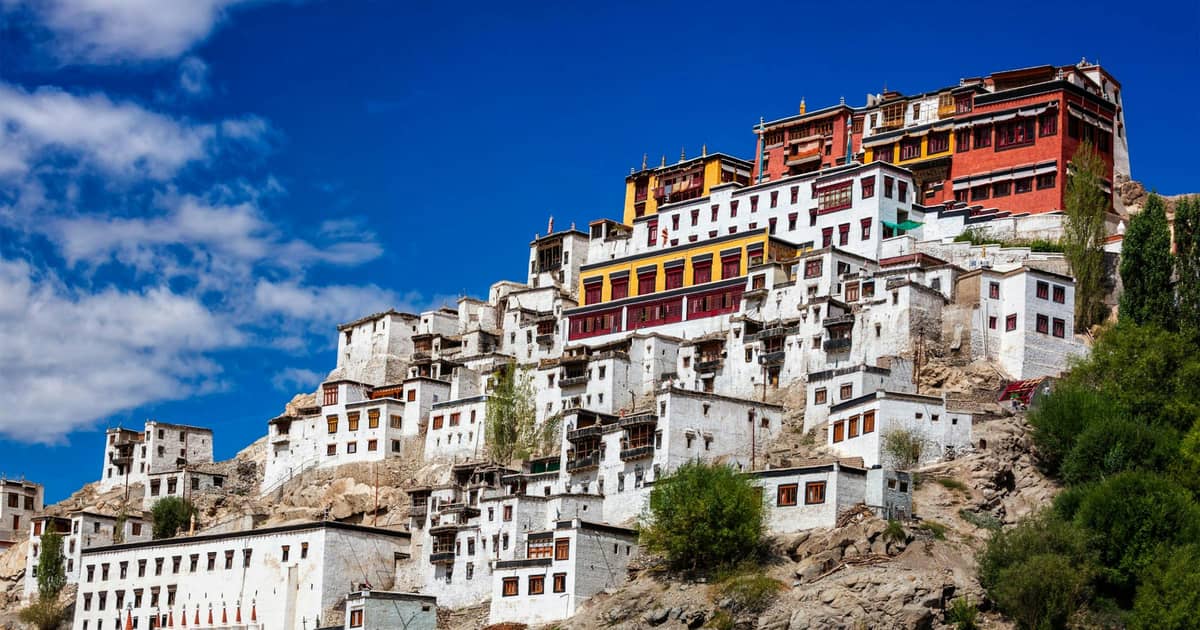
Ladakh does not ease you in. From the moment you arrive — whether the Himalayan peaks slide past your airplane window or the Tanglang La pass reveals itself through a dusty windshield — it announces itself as something apart. A landscape that operates on geological time, where rivers have carved valleys over millions of years through rock that used to be the floor of the Tethys Sea. Where Buddhist monasteries have stood on cliffsides for over a thousand years. Where the sky at night is so clear and so full of stars that the Milky Way casts a visible shadow.
In 2026, the Ladakh season is open. The Srinagar-Leh Highway has been accessible since early April. The Manali-Leh Highway is expected to open for tourist traffic by late May. And for those who fly into Leh — Kushok Bakula Rimpochee Airport operates year-round.
This is the complete guide: highway status, permits, routes, best destinations, itinerary, cost, and the honest preparation advice that most Ladakh guides either skip or soften.
Understanding which roads are open, and when, is the single most important planning factor for a Ladakh trip.

Status: Open (as of early April 2026)
The Srinagar-Leh Highway opens earlier than the Manali route because the key pass — Zoji La at 3,528 metres — sits at a lower altitude than the passes on the Manali side. In 2026, the route opened between late March and mid-April, consistent with historical patterns.
Route summary:
The Srinagar route offers a significantly gentler altitude gain than the Manali side — you spend more time at intermediate altitudes before arriving in Leh, which substantially reduces altitude sickness risk for many travellers.

Status: Closed as of April 2026 — expected opening late May 2026
The Manali-Leh Highway remains closed while the Border Roads Organisation (BRO) clears snow from the high-altitude passes. In 2025, the highway was restored on May 13 for BRO vehicles, with tourist traffic permitted from late May. The 2026 pattern is expected to be similar.
Important distinction: BRO connecting the highway and the highway being open for tourists are two different things. After the official restoration, one-way traffic restrictions often apply between Darcha and Sarchu for 1–2 weeks, and bikes may be restricted until road conditions stabilise. Always verify current status with local operators in Manali before setting out.
Route summary:
Fuel warning on the Manali-Leh route: Petrol pumps are available at Tandi (110 km from Manali) and Keylong (115 km). The next reliable fuel is at Karu — approximately 350 km from Keylong. Fill completely at Tandi or Keylong and carry 10–15 litres extra. This is not optional.
Flights to Leh operate year-round from Delhi, Mumbai, Bangalore, Srinagar, Jammu, and Chandigarh. This is the most time-efficient way to reach Ladakh and the only option outside the road season (November to April).
Route | Flight Time | Airlines |
|---|---|---|
Delhi → Leh | 1 hr 10 min | IndiGo, Air India, SpiceJet, Go First |
Mumbai → Leh | 2 hrs 30 min | IndiGo, Air India (mostly via Delhi) |
Srinagar → Leh | 30 min | Alliance Air, regional carriers |
Chandigarh → Leh | 1 hr | Seasonal direct flights |
Leh airport altitude: 3,256 metres. If flying in, you gain altitude in approximately one hour what a road traveller gains over two days. Mandatory rest on arrival days 1 and 2 is not optional — it is medically necessary.
As of 2026, Indian nationals do not need a traditional Inner Line Permit for Ladakh. The system was replaced by an Environment/Development Fee (EDF) that serves the same access-control purpose.
Where to pay: lahdclehpermit.in
Fee structure:
What it covers (areas requiring EDF): Nubra Valley, Khardung La, Pangong Tso, Tso Moriri, Hanle, Turtuk, Dah-Hanu villages, Chusul, Umling La, Marsimik La, and all other inner line regions.
What does NOT require EDF: Leh town, Leh local sightseeing (Shanti Stupa, Leh Palace, Hall of Fame, Thiksey, Hemis, Spituk), travel on Manali-Leh Highway, travel on Srinagar-Leh Highway, Zanskar Valley.
Process:
Processing time: Typically within hours. Apply before leaving Leh for day trips, or from home before travel.
Foreign nationals require a Protected Area Permit (PAP) for all inner line areas. Fee: ₹600 per person.
Key zones:
How to apply: Through the LAHDC Leh portal (same website as domestic EDF) or in person at the DC Office in Leh. Same-day processing in Leh during peak season.
Carry 10 printed copies. Physical photocopies are required at every checkpost. Permits are verified at Khardung La, Chang La, South Pullu, and multiple other points.
Note for NRIs with OCI/PIO cards: Require PAP like other foreign nationals.

Leh sits at 3,524 metres and is the capital and logistics hub of Ladakh. It is also, genuinely, a destination in its own right.
Leh sightseeing (no permit required):
Leh Palace — a 17th-century, 9-storey royal palace that dominates the ridge above the old city. Built by King Sengge Namgyal, it closely resembles the Potala Palace in Lhasa — partly intentional, as Ladakh was a Tibetan cultural sphere. The views from the top floor across the Indus Valley are extraordinary.
Shanti Stupa — a large white Buddhist stupa built in 1991 by Japanese Buddhist monks, perched on a hilltop above Leh. The 30-minute walk up is the best gentle acclimatisation activity for your first day in Leh. Sunsets from here are exceptional.
Thiksey Monastery — 19 km from Leh, considered one of the finest monasteries in Ladakh. Its 12-storey structure housing a 15-metre Maitreya Buddha statue is architecturally impressive. The 6 AM morning prayer ceremony (puja) is one of the most moving experiences in Ladakh for those who manage the early start.
Hemis Monastery — the wealthiest and largest monastery in Ladakh, 45 km from Leh. Home to the Hemis Festival (June–July), one of the most spectacular masked dance festivals in the Himalayan world. The monastery museum holds significant thangka paintings and religious artefacts.
Hall of Fame — a military museum maintained by the Indian Army commemorating soldiers who died in the 1947, 1962, 1971, and 1999 wars. Particularly moving given Ladakh's strategic position — the Kargil conflict was fought partially on ground visible from Leh.
Magnetic Hill and Sangam — the famous (if scientifically overstated) optical illusion spot and the confluence of the Indus and Zanskar rivers. Worth a 2-hour detour on your second acclimatisation day.

Nubra Valley sits 150 km north of Leh and is reached via Khardung La Pass — at 5,359 metres, one of the highest motorable passes in the world. The descent into Nubra reveals a complete transformation: from Leh's barren brown mountains to a valley of sand dunes, Bactrian (double-humped) camels, apple orchards, and the Shyok and Nubra rivers.
Key destinations in Nubra:
Hunder — the main tourist village, home to the famous sand dunes and the camel safari experience. Bactrian camels were historically used on the Silk Road and their presence in this sub-tropical microclimate within the Himalayas is genuinely surreal.
Diskit Monastery — the oldest and largest monastery in Nubra Valley, with a 32-metre statue of the Maitreya Buddha overlooking the entire valley. The monastery dates to the 14th century.
Turtuk — a remote village 90 km from Diskit, near the Line of Control with Pakistan. Turtuk was part of Pakistan until 1971 and has a unique Balti culture distinct from the rest of Ladakh. The village's apricot orchards, the warmth of the Balti people, and the sheer remoteness make it one of Ladakh's most compelling off-the-beaten-path destinations. Requires a separate permit to visit.
Dah-Hanu — home to the Brokpa community, considered by some the last descendants of the armies of Alexander the Great. Their distinct Indo-Aryan features, flower-crown traditions, and songs are unlike anything else in Ladakh. Also requires a permit.
Practical note: Nubra Valley temperature is warmer than Leh — the sub-tropical microclimate produces conditions more similar to Himachal Pradesh. Pack layers but expect daytime temperatures of 20–30°C in summer.

Pangong Tso (Tso means "lake" in Ladakhi) sits at 4,350 metres and stretches 134 kilometres in total — about 45 km of which lies in India, with the remainder in China. The lake is famous for its extraordinary colour: a deep, translucent blue-green that shifts with the light and has no parallel in Indian geography.
The lake gained international visibility after its appearance in the film 3 Idiots (2009), which was shot on its northern bank.
Getting to Pangong Tso:
Route 1 (from Leh): Via Karu and Chang La Pass (4,390 m). Distance: 170 km, approximately 5 hours. This is the most popular route with the best road conditions. Chang La is the third-highest motorable pass in the world.
Route 2 (from Nubra Valley): Via Agham and Shyok Village along the Shyok River. Distance from Diskit: approximately 175 km. BRO has improved this route significantly — what was once a rough riverbed track is now largely tarmacked with new bridges. This route allows you to combine Nubra and Pangong without returning to Leh, saving significant time. Prone to landslide disruption during monsoon.
Key points at Pangong:
Spangmik — the first Indian settlement on the lakeshore and the main base for tourists. Most camps and guesthouses are clustered here.
Man and Merak — two villages further along the lakeshore that were previously closed to foreign tourists. Now open with PAP, offering more remote and less-visited sections of the lake.
Overnight camping at Pangong is one of the quintessential Ladakh experiences — watching the lake colours change at dawn from inside a tent at 4,350 metres is an experience that requires no filter.
Fuel critical note: There is no petrol pump at Pangong or en route from Chang La. Fill your tank completely in Leh before departing. If coming from Nubra, verify fuel availability at Diskit before setting out.

If Pangong Tso is Ladakh's famous lake, Tso Moriri is its most beautiful one. Situated at 4,595 metres in the Changthang plateau, Tso Moriri is the largest high-altitude lake entirely within India. It is quieter, more remote, more biodiverse, and less photographed than Pangong.
The lake is a designated Ramsar Wetland of International Importance and a conservation reserve. Camping directly at the lakeshore is prohibited — a restriction that, combined with the remote access, has kept it blissfully uncrowded relative to Pangong.
Wildlife at Tso Moriri: Black-necked cranes (critically endangered), bar-headed geese, Tibetan wild ass (kiang), Tibetan wolves, and — if you are very fortunate — the snow leopard. The wildlife density here is exceptional by Indian standards.
Getting to Tso Moriri:
Route from Leh: Via Chumathang and the Indus River valley. Distance: approximately 230 km, 6–7 hours. This route passes Thiksey and Hemis monasteries and Chumathang hot springs.
Route from Pangong: Via Chusul and Tsaga La (Zone 13 permit required). Distance: approximately 235 km. Subject to army clearance — this route may be restricted regardless of permit status. Treat it as a bonus possibility, not a guaranteed route.
Where to stay: Korzok village at the lakeshore has guesthouses and basic tented camps. Accommodation is simple and limited — book in advance during peak season (July–September).
Hanle sits at 4,500 metres near the India-China border in the Changthang region. It is home to the Indian Astronomical Observatory — one of the highest optical telescopes in the world — and has been designated India's first dark sky reserve, making it one of the finest stargazing destinations in the country.
Reaching Hanle requires Zone 13 on your PAP/EDF, and the army may restrict access near the LAC regardless of permit status. Build flexibility into any Hanle plan. For those who make it, the combination of extreme remoteness, clear skies, and the observatory backdrop make Hanle unlike anywhere else in Ladakh.
The Zanskar Valley — accessed via Kargil and Padum, or increasingly via the new Nimmu–Padum–Darcha (Shinku La) road — is the final frontier of Ladakh for most travellers. No permit required.
Zanskar is where Ladakh goes when it wants solitude. The population is approximately 15,000 people spread across one of the most geographically isolated inhabited regions in India. The Phugtal Monastery — a 12th-century monastery built into a cliffside cave — is among the most dramatic religious sites in the entire Himalayan world.
The Chadar Trek (January–February), walking on the frozen Zanskar River, is one of India's most iconic winter adventure experiences and is available only during winter when the river is frozen solid.
Month / Season | Temperature (Leh) | Highway Status | Crowd Level | Recommended? |
|---|---|---|---|---|
January–February | –15 to 5°C | Closed (fly only) | Very low | For Chadar Trek only |
March–April | –5 to 15°C | Srinagar route open | Low | Good (fly or Srinagar route) |
May | 5 to 22°C | Manali opens late May | Low–moderate | Excellent — shoulder season |
June | 10 to 28°C | Both routes open | Moderate | Very good |
July–August | 15 to 33°C | Both routes open | High | Good but crowded |
September | 8 to 25°C | Both routes open | Low–moderate | Best overall — photographer’s month |
October | 0 to 18°C | Manali closes late Oct | Low | Excellent (autumn colours) |
November–December | –10 to 5°C | Manali closed | Very low | Winter experience only |
May is an increasingly popular choice — shoulder-season prices (hotels and jeep rentals are 15–30% cheaper than peak), thawing Pangong Tso, low crowds, and the specific quality of a landscape still cold and fresh from winter. The Manali highway opening in late May adds adventure for road travellers.
June is when the season fully opens, all routes are accessible, and the landscape is at peak green from snowmelt. Crowd levels are rising but still manageable compared to July–August.
September is the single best month for photography and overall experience quality. The tourists of high summer have left, the famous Hemis and other festivals have passed, the poplar trees along the Indus begin to turn golden, and the sky has a clarity that July's dust haze does not match. A strong case for the best-kept secret in the Ladakh calendar.
October extends the season unexpectedly well. Nubra Valley and Leh are still warm enough by day, the Manali highway remains open until late October, and the autumn colours in the river valleys are extraordinary.
This is the recommended standard circuit for a first-time Ladakh visitor. It covers the highlights while building in proper acclimatisation — the non-negotiable that makes or breaks the trip.
Land in Leh or arrive by overnight road from Srinagar. Do nothing. Rest completely. Walk gently at most. Headache is normal and expected. Drink 4 litres of water. No alcohol. No strenuous activity. Eat light. The altitude will feel more forgiving tomorrow.
Gentle morning walk to Shanti Stupa (30 mins uphill — take it slowly, stop and breathe). If you feel well, afternoon: Leh Palace, Old Leh market, and the lanes of the old city. This is a light day — your body is still adjusting to 3,524 metres.
After two nights at altitude, your body should be reasonably adjusted. Full-day monastery circuit: Pathar Sahib Gurudwara → Magnetic Hill → Sangam (Indus-Zanskar confluence) → Spituk Monastery → Hall of Fame. Afternoon: Shey Palace, Thiksey Monastery, Hemis Monastery. Return to Leh.
Apply for/carry your EDF receipt. Leave Leh by 7 AM — high passes are clearest in the morning before afternoon cloud and wind builds. Drive via Khardung La (5,359 m) — stop for 20 minutes maximum (altitude too high for longer stops, especially in early season). Descend to Hunder. Afternoon: Diskit Monastery and the Maitreya Buddha statue. Evening: Hunder sand dunes at sunset, Bactrian camel ride. Stay in Nubra.
If Turtuk is on your plan: leave early for the 90 km drive from Hunder. Spend 2 hours in Turtuk village, explore the Balti community, apricot orchards, and local home stays. Return to Hunder for overnight, or proceed via the Shyok route to Pangong if not doing Turtuk.
The adventurous direct route: Hunder → Agham → Shyok Village → Durbuk → Tangtse → Spangmik (Pangong). Distance: approximately 175 km, 5–6 hours. The Shyok River drive is one of the finest stretches of road in all of Ladakh — the river runs alongside you for most of the way, with 6,000 metre peaks visible above. Arrive Pangong by afternoon. Sunset at the lake. Stay in camp at Spangmik.
No rushing today. Wake before sunrise and watch the light shift across the lake. This is why you came. Photograph the lake from multiple angles at Man and Merak villages if time allows. Afternoon: rest, read, or explore the lakeshore on foot. Stay overnight at Pangong — the night sky and the silence are extraordinary.
Two options: Return to Leh via Chang La and drive from Leh toward Tso Moriri via Chumathang (safer, longer); or attempt the direct Changthang route via Chusul (Zone 13 permit, subject to army clearance — check conditions before committing). Arrive Korzok (Tso Moriri) by evening. Overnight at guesthouse or camp.
Tso Moriri rewards stillness. Morning: walk along the lakeshore at dawn when the water is mirror-calm and the black-necked cranes are active. Afternoon: explore Korzok village and its small monastery. Watch for wildlife around the lake edges. Stay a second night if your itinerary allows — Tso Moriri is worth the extra time.
Drive from Korzok back to Leh via the Rupsho plateau, passing Tso Kar — a salt lake that is a secondary wildlife destination and worth a 30-minute stop for bird watching. Continue to Leh via the Manali-Leh Highway. Total distance: approximately 230 km. Overnight in Leh before departure.
Category | Budget | Mid-Range | Comfortable |
|---|---|---|---|
Flights (round trip, Delhi–Leh) | ₹8,000–14,000 | ₹14,000–22,000 | ₹22,000–40,000 |
Accommodation (9 nights) | ₹4,500–9,000 | ₹13,500–27,000 | ₹36,000–90,000 |
Jeep / taxi rental (Leh local + circuits) | ₹12,000–18,000 | ₹20,000–30,000 | ₹35,000–55,000 |
Meals (10 days) | ₹3,000–5,000 | ₹6,000–10,000 | ₹12,000–20,000 |
Permits (EDF) | ₹700 | ₹700 | ₹700 |
Miscellaneous (monastery entry, oxygen if needed, tips) | ₹1,500–3,000 | ₹2,500–5,000 | ₹5,000–10,000 |
Total (per person) | ₹29,700–49,000 | ₹56,700–94,700 | ₹1,10,700–2,15,700 |

For solo bikers or groups sharing a rented bike:
The Ladakh Taxi Union operates shared taxis from Leh's main taxi stand to most destinations. This is the best budget option for solo travellers or pairs who cannot fill a private jeep:
Property | Type | Approx. Cost/Night |
|---|---|---|
The Grand Dragon | Luxury, best in Leh | ₹12,000–25,000 |
Hotel Bijoo | Mid-range, excellent service | ₹3,500–6,000 |
Zostel Leh | Hostel, backpacker community | ₹600–1,800 (dorm–private) |
Local guesthouses (Changspa Road) | Budget | ₹800–2,000 |
A range of fixed camps and temporary tented camps operate May–October directly on the Spangmik lakeshore. Prices: ₹2,500–6,000 per person per night (most include dinner and breakfast — meals at Pangong are otherwise limited). Book in advance for July–August.
Hunder and Diskit have a growing number of comfortable camps and guesthouses. Prices: ₹1,500–5,000 per night. Apple orchard homestays in Sumur offer a more authentic experience.
Options are limited — a handful of guesthouses in Korzok village (₹800–2,000) and seasonal tented camps (₹2,000–4,000 with meals). Book well in advance. During July–September, accommodation fills quickly.
Leh sits at 3,524 metres. Pangong is at 4,350 metres. Tso Moriri is at 4,595 metres. Khardung La is at 5,359 metres. The altitude in Ladakh is not metaphorical — it is one of the most physiologically demanding destinations accessible to general tourists anywhere in the world.
If you fly into Leh, you gain altitude in approximately 90 minutes that a road traveller gains over two days. The risk of Acute Mountain Sickness (AMS) is significantly higher for air arrivals if they do not rest immediately on landing.
Rest on arrival days. The two-day acclimatisation period in Leh is not recommended — it is medically required. Do not attempt Nubra Valley, Pangong, or any high-altitude destination until you have slept two nights in Leh without serious symptoms.
Hydrate aggressively. Drink 4–5 litres of water per day at altitude. Dehydration significantly worsens AMS symptoms. Carry a 1-litre bottle at all times.
Ascend gradually. The principle "climb high, sleep low" applies. Visit Khardung La during the day but don't sleep at altitude higher than where you're acclimatised to.
Avoid alcohol for the first 48 hours. Alcohol dehydrates and suppresses respiratory drive — both of which worsen high-altitude adaptation.
Diamox (Acetazolamide). A prescription medication that accelerates acclimatisation. Consult your doctor before travel. Standard dose: 125–250 mg twice daily starting 1–2 days before your ascent to high altitude. Common side effect: increased urination (which is actually part of how it works) and tingling in fingers/toes.
Supplemental oxygen. Available in Leh — most hotels have oxygen cylinders. For severe symptoms at Khardung La or other high passes, roadside vendors sell portable oxygen cans. These provide temporary relief but are not a substitute for descent if serious symptoms develop.
Know when to descend. Confusion, severe ataxia (inability to walk straight), extreme breathlessness at rest, or persistent vomiting are signs of High Altitude Cerebral Oedema (HACE) or High Altitude Pulmonary Oedema (HAPE) — both medical emergencies. Descend to a lower altitude immediately. SNM Hospital in Leh handles AMS emergencies regularly.
Clothing (layering is mandatory):
Health and safety:
Documents and essentials:
There is a particular kind of perspective that comes from standing at 5,000 metres and watching the Karakoram and Zanskar ranges converge in every direction, from driving through the Indus Valley past monasteries that have been reading sutras since before India's current borders existed, from sleeping under a sky that has not yet been dimmed by city light.
Ladakh is not just a travel destination. It is a recalibration. The altitude forces you to slow down. The landscape forces you to look. The culture — a synthesis of Tibetan Buddhism, Silk Road trade history, and an extraordinary natural environment — forces you to pay attention.
Go with preparation, go with patience, and go without rushing. Ladakh will give back exactly what you bring to it.
Get updates, exclusive deals, insider tips & special offers—straight to your inbox!
 USA: +1 (415) 718-2654
 IND: +91 9629929970
 IND: +91 9629929970
 USA: +1 (415) 718-2654